


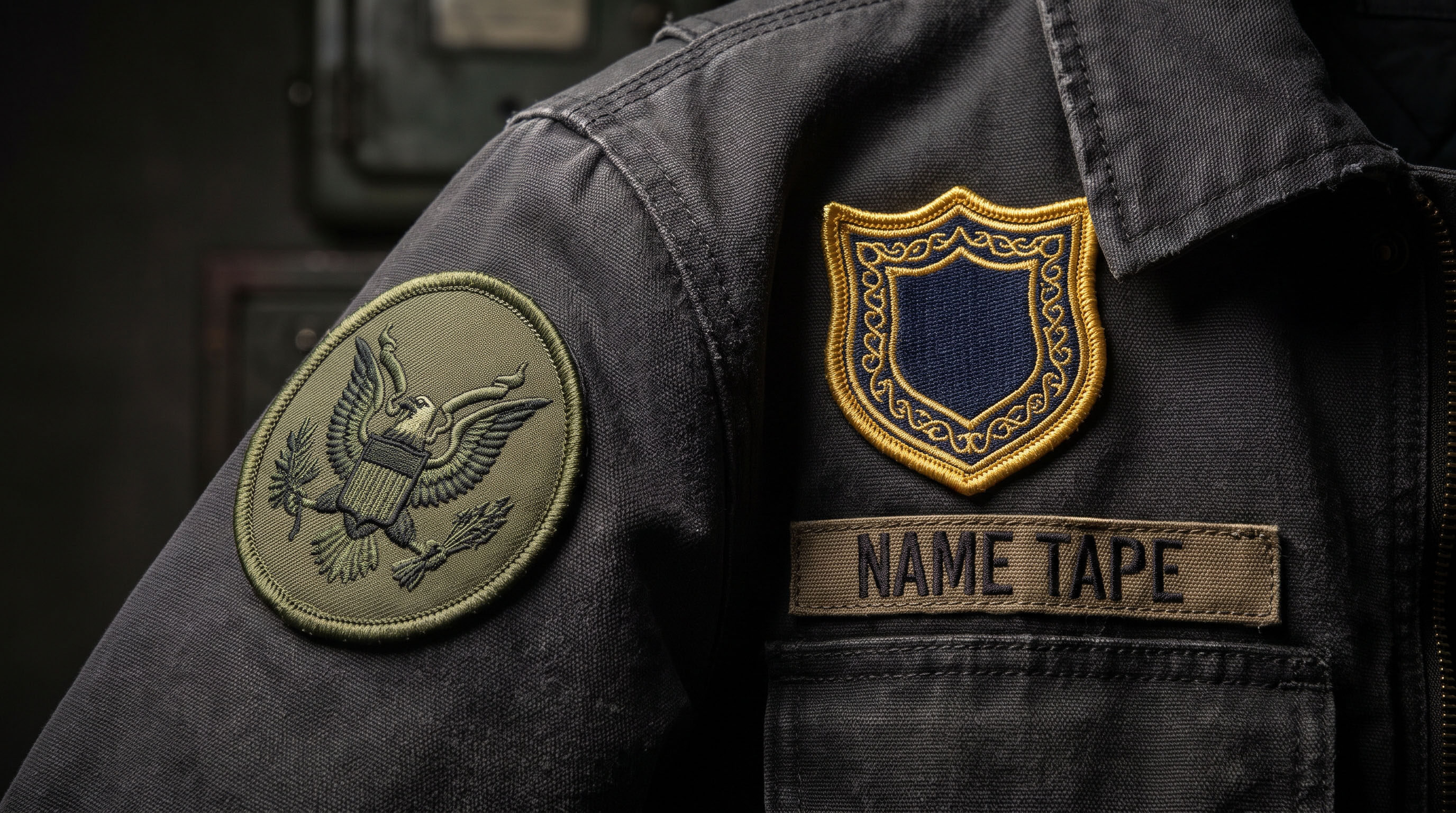
A reunion organizer calls. Forty guys from the same battalion, twenty years out. She wants a patch for each of them. Something they will actually sew on a jacket, not toss in a drawer.
That is a different job from a streetwear drop. The stakes are not hype. The stakes are getting it right for people who earned the symbols on it.
Veterans Day just landed. It is a good moment to talk about how service patches should be designed, because the requests keep coming all year: reunions, memorial rides, VFW and Legion posts, retirement ceremonies, nonprofit fundraisers, family tributes. We have been producing custom embroidered patches since 2008. Here is what we have learned about doing this kind of work with respect.
Start With Who Will Wear It
Every good patch starts with the wearer. With service patches, that question carries extra weight.
A patch for the veterans themselves can reference their unit, their deployment, their ship, their years. It is their story. A patch for supporters, family members or a fundraiser should honor service without implying the wearer served. Those are two different designs, and mixing them up is the fastest way to make someone uncomfortable.
Simple test. Read the patch out loud as if the person wearing it is saying it. "1st Battalion, Iraq 2005" on a veteran's jacket is a statement of fact. On a cousin's jacket it reads like a claim. For supporter pieces, shift the language: "Proud Army Family," "Honoring Our Veterans," "In Memory Of." Clear. Honest. Nobody has to explain it at the bar.
The same logic applies to rank and awards. Do not design patches that imitate decorations, rank insignia or qualification badges for anyone who did not earn them. Wearing unearned awards is a real issue in the veteran community, and a well-meant gift can land wrong. If the patch is for the person who earned it, they will tell you exactly what belongs on it. Ask them.
Official Insignia: Know the Rules Before You Stitch
This is the part most first-time designers miss.
The official emblems, seals and many unit insignia of the U.S. armed forces are protected marks. Each branch runs a trademark licensing program. If you plan to sell patches carrying an official branch emblem or seal, you generally need a license from that branch first. Personal, non-commercial use for a unit's own members is a grayer area, but the safe move is the same: check with the branch's trademark office or the unit association before you finalize artwork.
The good news is that the best service patches usually do not need the official seal at all. Original artwork almost always looks better anyway. Think:
Original emblems. An eagle, an anchor, a mountain range, a ship silhouette, coordinates of a base, a date. Symbols that point at the service without copying a protected mark.
Unit nicknames and mottos. Many units have informal names and sayings the members use among themselves. Those carry more meaning to the people wearing them than any official crest.
Custom typography. Years of service, a reunion year, a name. Clean lettering in a strong border is timeless.
When a customer sends us official insignia, we will flag it and talk it through. Not to slow the order down. To make sure the patch does not become a problem after it ships.
The Flag Detail Everyone Gets Wrong
If your patch includes the American flag, orientation matters.
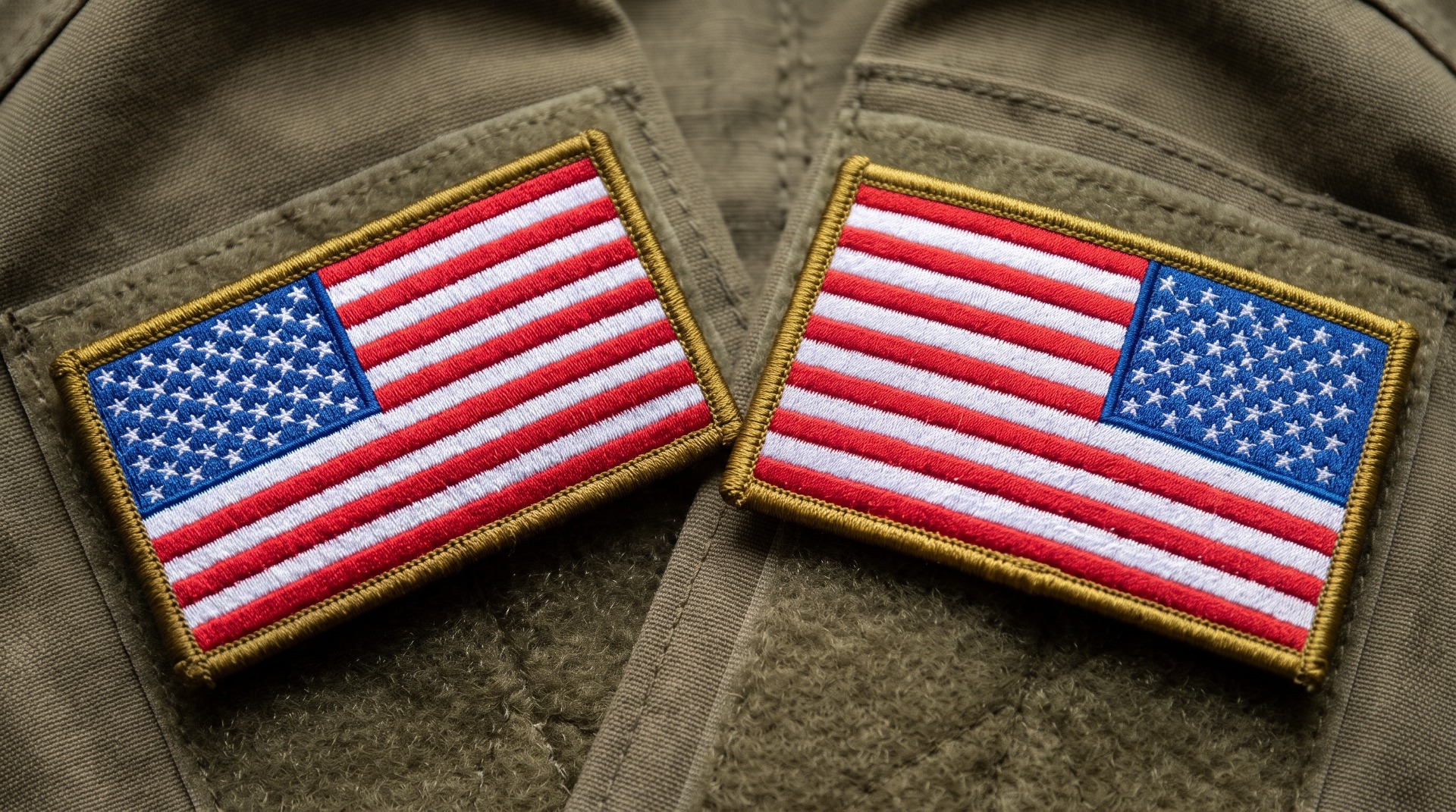
A standard flag patch shows the blue field of stars in the upper left. Worn on the left shoulder, that is correct. On the right shoulder, uniform convention uses a reversed flag, with the stars in the upper right. The idea is that the flag looks like it is flying forward as the wearer moves, never retreating. Veterans will notice this instantly.
So if your design puts a flag on a right-sleeve patch, order the reversed version. If you are not sure where people will wear it, order both. At our low minimums of 5 pieces for embroidered patches, running two versions costs very little and saves a lot of side-eye.
Other flag basics: do not distort the proportions, do not print text across the flag itself, and keep it clean. A flag that is stretched to fill a weird shape reads as careless.
Color: Full Color vs. Subdued
Service patches come in two main looks, and the choice changes everything.
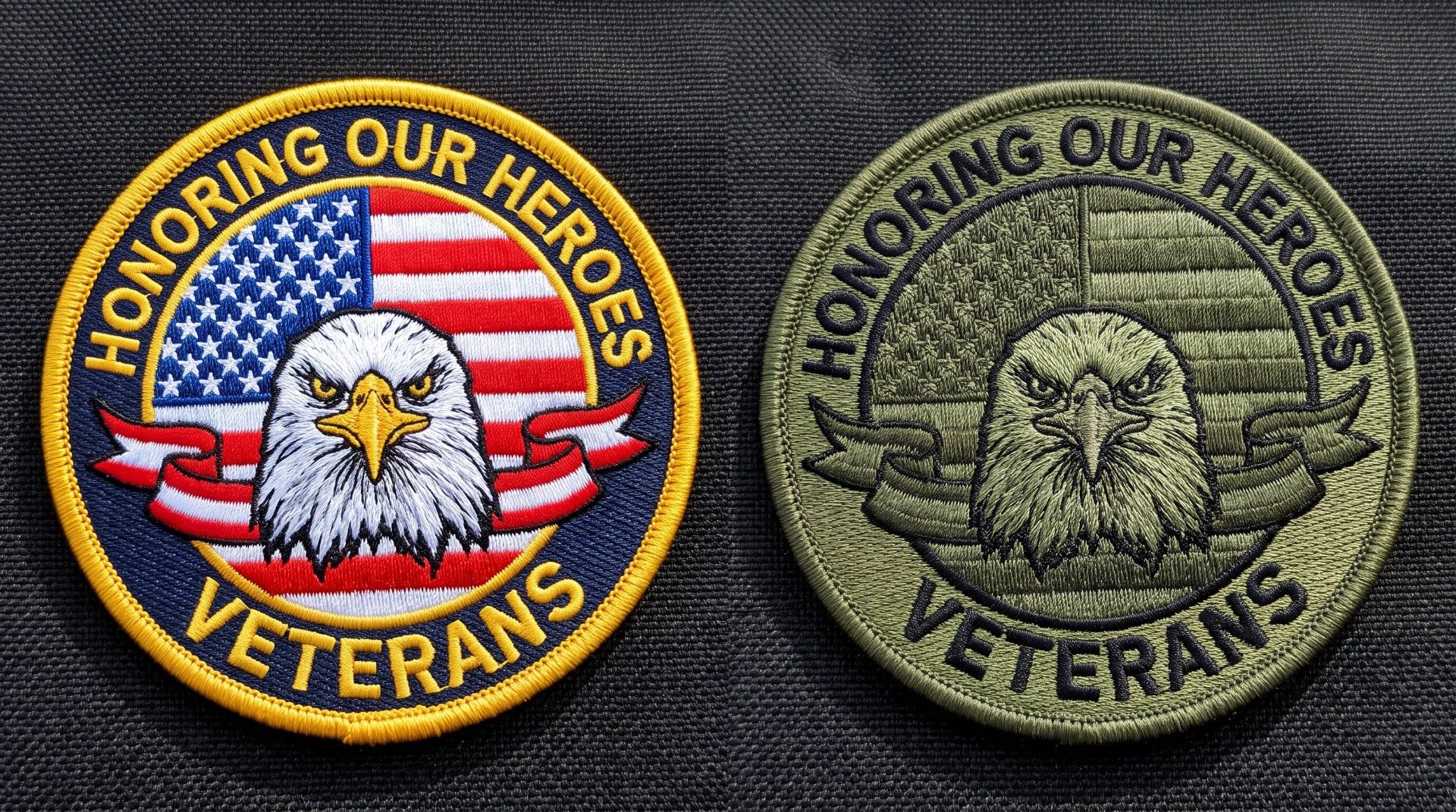
Full color. Bright red, white and blue, gold borders, crisp whites. This is the dress look: reunion jackets, vests, display pieces, shadow boxes, ceremony gifts. It pops on navy, black and white garments and photographs well.
Subdued. Olive drab, coyote tan, black, dark gray. This is the field look, built to blend. Subdued patches feel more authentic to a lot of veterans because it is what they actually wore. They look sharp on tactical gear, caps, rucks and range bags. They also read as more modern and understated, which is why subdued styling crosses over into streetwear and workwear.
For a reunion, we often suggest doing both. Full color for the jacket, subdued for the hat. Same artwork, two thread palettes. Matching the thread to the exact shade of OD green or tan matters here. Send us a reference, a physical sample if you have one, and we will match it to the closest thread color.
Detail, Size and the Patch Type That Fits
Service artwork tends to be dense. Small lettering, fine lines in an eagle's feathers, tiny stars. Embroidery has limits. Thread has width. Push too much detail into a small patch and it turns to mush.
Rules we stick to:
Keep text at least about a quarter inch tall for clean embroidered lettering. Anything smaller starts to fill in. Unit names and years should be the biggest text on the patch, not the smallest.
Size up when detail matters. A 3 inch round gives a crest room to breathe. A 2 inch round is better for a simple emblem or a single date. Shoulder patches commonly run 3 to 3.5 inches. Hat patches usually sit around 2 to 2.5 inches tall.
Choose the right construction. Standard embroidered patches give that raised, classic texture people expect from military patches. If your design has fine lettering, a detailed ship or a tiny map, woven patches use thinner thread and hold much finer detail in a flatter finish. Need to compare everything side by side? Browse all custom patches.
Borders. A merrowed border (the thick, overlocked edge) is the classic military look and works on circles, ovals, shields and rectangles. Complex shapes get a heat-cut edge. For a traditional service patch, merrowed almost always looks right.
Backing: Match It to the Gear
Backing is not an afterthought. It decides whether the patch gets worn.
Sew-on. The most durable option and the right call for leather vests, heavy canvas jackets and anything going on a motorcycle. Iron-on adhesive does not grip leather. Sew it.
Iron-on. Easy for cotton caps, tees and light jackets. Good for supporter pieces and fundraisers where people want to apply it at home. For long-term wear, a few stitches around the edge after ironing give it the strongest hold.
Hook and loop. The patch backing many veterans prefer, because it moves between bags, plate carriers, caps and jackets. Ask for it on your quote if your group wears gear with loop panels.
Memorial Patches Deserve Extra Care
Some of the most important patches we make honor someone who did not come home, or a veteran who passed recently. These orders come with emotion attached, and usually a deadline tied to a service or a ride.
A few things help. Triple check names, ranks and dates with the family before approving the proof. Spelling errors on a memorial patch hurt. Keep the design simple and dignified: name, dates, a symbol that meant something to that person. A black border or a single line of text like "Never Forgotten" says plenty. Avoid cramming in every detail of a career. Restraint reads as respect.
Tell us it is a memorial order when you request a quote. We will make sure the proof is right before anything goes to production.
Plan Ahead for the Dates That Matter
Veterans Day is this week, which means anyone who wanted patches for it should have ordered weeks ago. Do not stress about that. Most service patches are not really about one calendar date.
Look at what is coming instead. Memorial Day. Unit reunions, which often get planned a year out. Post anniversaries. Charity rides in the spring. Retirement ceremonies. For any of those, start the design conversation at least a month ahead so there is time for artwork, a proof round, feedback from the group and production without a scramble.
If the patch is for a group, collect input early. Ask a few veterans in the unit to review the proof. They will catch the wrong shade of green, the reversed flag, the motto that is slightly off. Ten minutes of their eyes saves a reorder.
Built to Be Worn, Not Stored
The best service patch is the one that ends up on a jacket for twenty years. Honest wording. Original artwork or properly licensed marks. Correct flag orientation. Colors that match how the wearer served. A backing that fits their gear.
Get those right and the patch does its job: it tells a story the wearer is proud to carry.
We make custom embroidered patches with low minimums starting at 5 pieces, free quotes and free artwork proofs. Send us your idea, your unit details or a rough sketch, and we will help you build a patch worth wearing.
The information below is required for social login
Sign In
Create New Account