


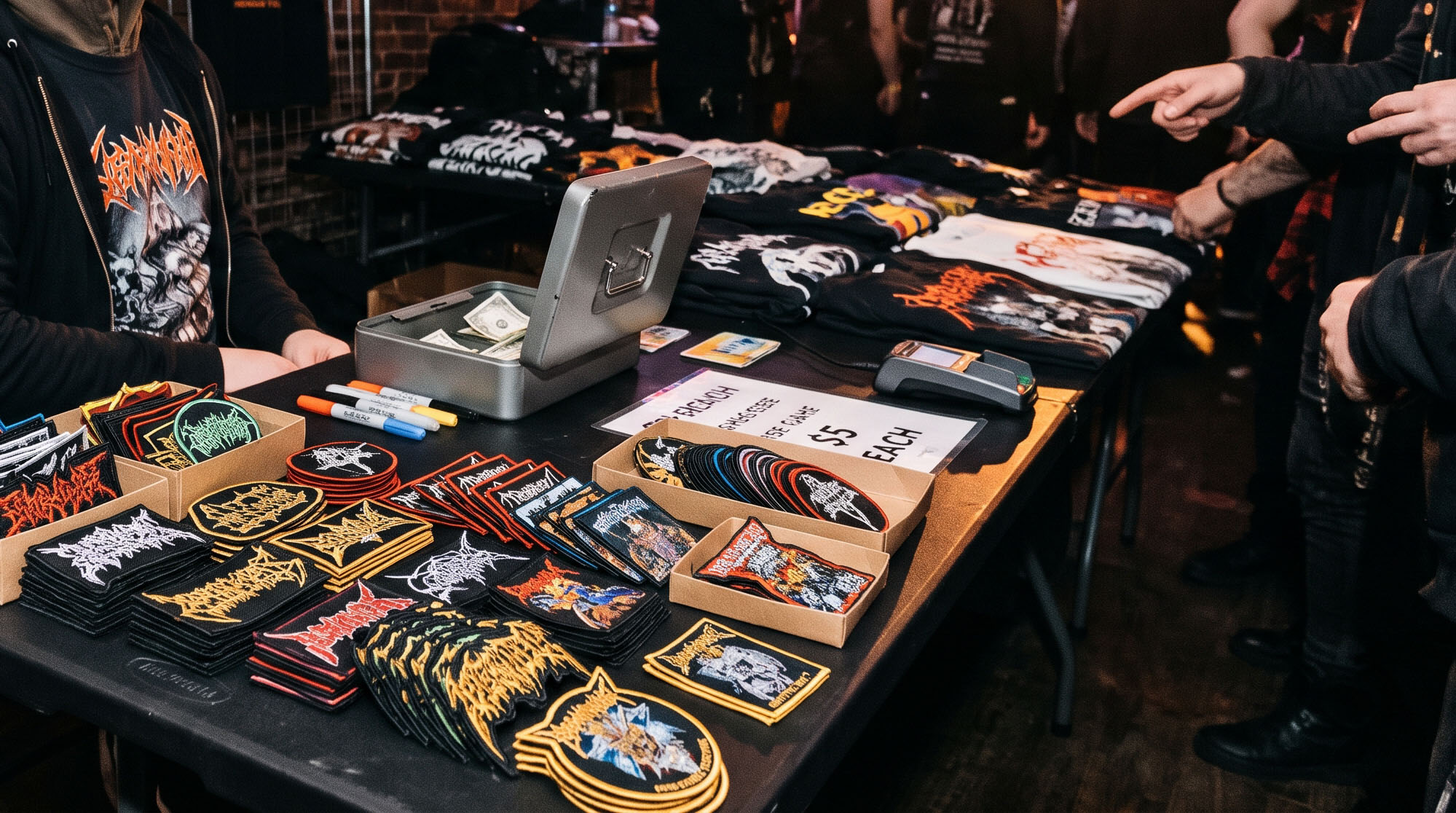
Doors at eight. The opener is loading in. You have a folding table, a cash box, a stack of shirts in four sizes and maybe forty minutes before the room fills.
Shirts are the headline. Patches are the quiet money. They cost a fraction of a tee to make, they never come in the wrong size, and they fit in a jacket pocket on the way home. Kids who already own your shirt buy a patch. Kids who cannot afford the shirt buy a patch. The person who came for the headliner and got converted by your set buys a patch.
Here is how to get custom patches right for the merch table: what to make, how to make it, how many to bring and how to sell them.
Why Patches Win at the Table
A shirt ties up real cash per unit and needs a size run. Guess wrong on the split and you are hauling twenty XXLs home in a van. A patch is one size. Every single one fits every single fan.
Then there is the space. A box of 200 patches is the size of a shoebox. It rides in a backpack. It does not crush, wrinkle or mildew in a hot trailer. For bands touring in a small car, that matters more than anyone admits.
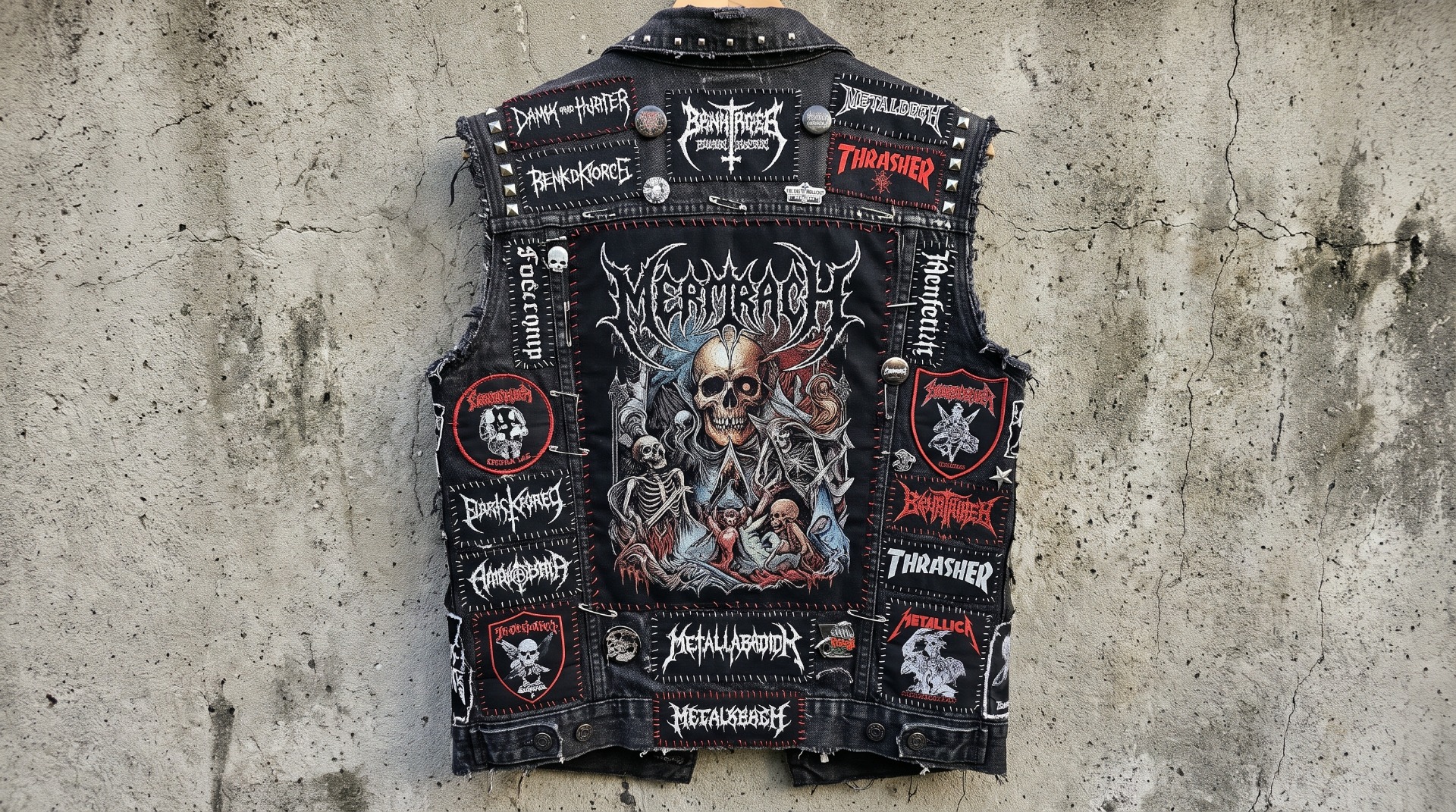
And there is the culture. Patches have lived on battle vests, denim jackets and backpacks since punk was new. A fan sewing your logo onto their jacket is making a statement that lasts longer than a tee. Shirts get worn out. Patches get moved from jacket to jacket for years.
Low price points move fast. A patch is an easy add-on at the end of a transaction: "and one of those too." That impulse buy is what turns a slow night at the table into a decent one.
Embroidered, Woven or Something Else
Not every patch is built the same. Pick the construction that matches your art.
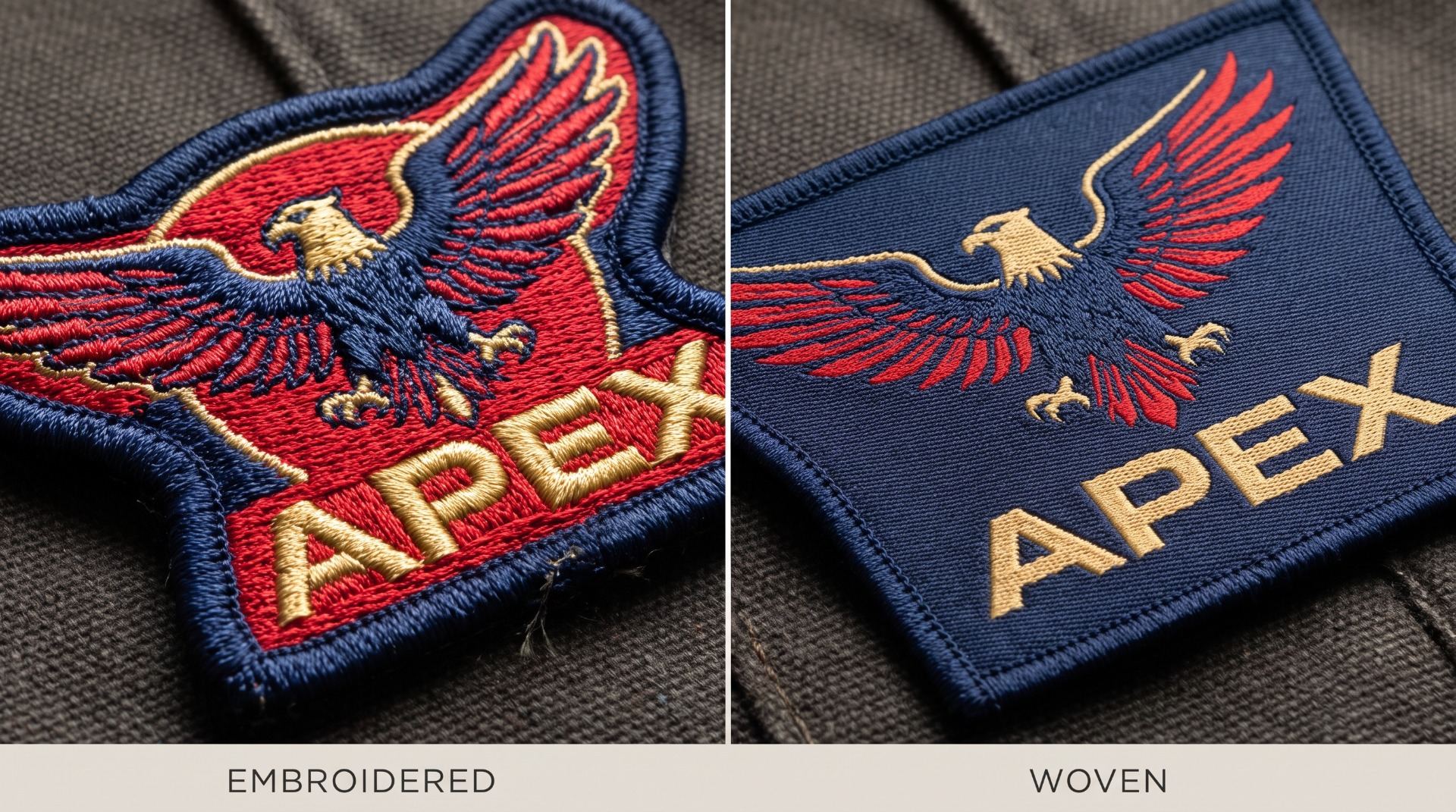
Embroidered. The classic. Raised thread, real texture, the look everyone pictures when they think "band patch." Custom embroidered patches are the right call for bold logos, chunky lettering and strong shapes. Skulls, wordmarks, lightning bolts, a mascot with clean outlines. Embroidery loves contrast and hates hairline detail. If your logo reads at thumbnail size, it will embroider well.
Woven. Finer thread, flatter surface, much sharper detail. Woven patches handle small text, thin lines and intricate album art that embroidery would blur. If your logo is a spidery black metal wordmark, or your design is a detailed illustration, woven is the move. They are also thinner and lighter, so they sit flatter on hats and bags.
The rest of the lineup. Chenille for that varsity, fuzzy, collegiate look. Sublimated or printed patches when you want full photographic artwork, gradients or an album cover reproduced exactly. PVC for a rubbery, weatherproof patch that looks great on backpacks. Browse all custom patches to see what fits your sound and your art.
Our rule of thumb: let the artwork decide. Do not force a photo-real album cover into embroidery. Do not waste woven detail on a two-color block logo.
Design Rules for Patches That Actually Sell
The merch table is a five-second sale. A fan glances over, sees a wall of stuff under bad lighting and decides. Design for that moment.
Read from six feet away. High contrast. Two to four colors usually beat eight. White or bright thread on black twill pops under stage lights. Muddy midtones disappear.
Logo first, then art. Your main patch should be your logo, clean and recognizable. That is your best seller every night. Once that is locked in, add an art patch for the superfans: album artwork, a tour graphic, a lyric, a mascot.
Mind the size. Three to four inches is the sweet spot for a jacket sleeve or chest. Go bigger, like a 10 to 12 inch back patch, for the battle vest crowd. Back patches sell fewer units but at a higher price, and the fans who buy them are walking billboards.
Shape is free branding. A custom laser-cut shape that follows your logo outline looks more premium than a plain circle. A rectangle with a merrowed border has its own classic, rugged look. Both work, just make it a choice, not a default.
Keep text big. Tiny tour dates and city lists turn to mush in embroidery. If you want the full date list, go woven or printed, or put the dates on the shirt and keep the patch clean.
Backings: Sew, Iron or Hook
Backing sounds boring. It changes what fans can do with the patch, so it changes how it sells.
Iron-on is the crowd-pleaser. Most fans do not own a sewing machine. Iron-on lets them stick it to a denim jacket or tote in a few minutes. For the general table, this is the safe default. Tell fans to add a few stitches around the edge if the jacket goes in the wash a lot.
Sew-on (no backing adhesive) is what the battle vest crowd actually wants. Hardcore patch collectors sew everything. Plain backing is also better on nylon, leather and anything that cannot take heat.
Hook-and-loop is huge right now on tactical bags, hats and jackets with a loop panel. Fans swap patches like pins. If your audience skews toward gear and backpacks, a hook-backed run is worth testing.
You do not need to choose one forever. Many bands run iron-on for the main logo patch and sew-on for the back patch.
How Many to Order and What to Charge
The honest answer: fewer than you think for your first run, more than you think for your best design.
Our minimums start at 5 pieces for most patch types, so you can test a design before committing to a full tour quantity. Unit price drops significantly as quantity climbs, though. That is the trade-off. Small runs let you test. Larger runs are where the margin lives.
A workable approach for a band playing regular shows:
Order your main logo patch in a higher quantity, enough to cover a full run of shows. It will sell every night, at every venue. Then order your art or tour patch in a smaller batch. See how it moves. Reorder the winner.
On pricing, look at your scene. Patches at small shows usually sit at a clean, easy price that does not need change. Round numbers move faster at a dark table with a line forming. Back patches can carry a much higher price: more stitching, more presence, and fewer of them in the room.
Bundles work. Shirt plus patch at a small discount pushes the average sale up and clears patches faster. "Any two patches" deals are an easy upsell for collectors who want both designs.
Selling Them at the Table
The best patch in the world will not sell sitting in a box under the table. Display matters.
Put them at eye level. Pin samples to a piece of black foam board or a corkboard propped up behind the table. A vertical display reads from across the room. A pile on the table reads like a clearance bin.
Wear your own. The person working the table should have the patch on their jacket. So should the band. Fans buy what they see on people they like.
Light it. Venues are dark. A low cost clip-on LED aimed at your display wall pays for itself in one night.
Make the price obvious. A clear price sign kills hesitation. Nobody wants to ask, and a lot of fans walk instead of asking.
Sell online too. Patches ship flat in a standard envelope. That makes them one of the cheapest items to add to an online store. Fans who missed you at the show can still rep the band.
Beyond the Band: Venues, Labels and Promoters
This is not only a band play. Venues sell their own logo patches to regulars. Independent record labels drop patches with vinyl preorders. Promoters and festival crews run event patches as a collectible: one design per year, people come back to complete the set. Podcasts, DJ crews and collectives use patches the same way.
The logic is the same everywhere. A low-cost, high-identity piece that fans carry for years. Every one of them is advertising you did not have to pay for twice.
Get It Made Right
We have made patches since 2008 for thousands of brands, bands and crews. Send us your logo or a rough sketch and we will help you decide which construction fits the art, what size reads best and which backing suits your crowd. Every order comes with a free artwork proof before anything is produced.
Low minimums from 5 pieces. Free quotes. Start with custom embroidered patches and build a table that sells.
The information below is required for social login
Sign In
Create New Account