

We get this question at least once a day: "What kind of label should I order?" It sounds straightforward, but the answer depends on your garment type, your brand positioning, your budget, and how the label will be attached during production. There's no single "best" label but there is a right label for your specific situation.
We've been helping brands figure this out since 2008. After producing labels for thousands of clothing lines, from one-person Etsy shops to brands selling in Nordstrom, we've developed a pretty clear sense of which label type works best for which application. Here's what we tell people.
Woven Labels: The Industry Standard
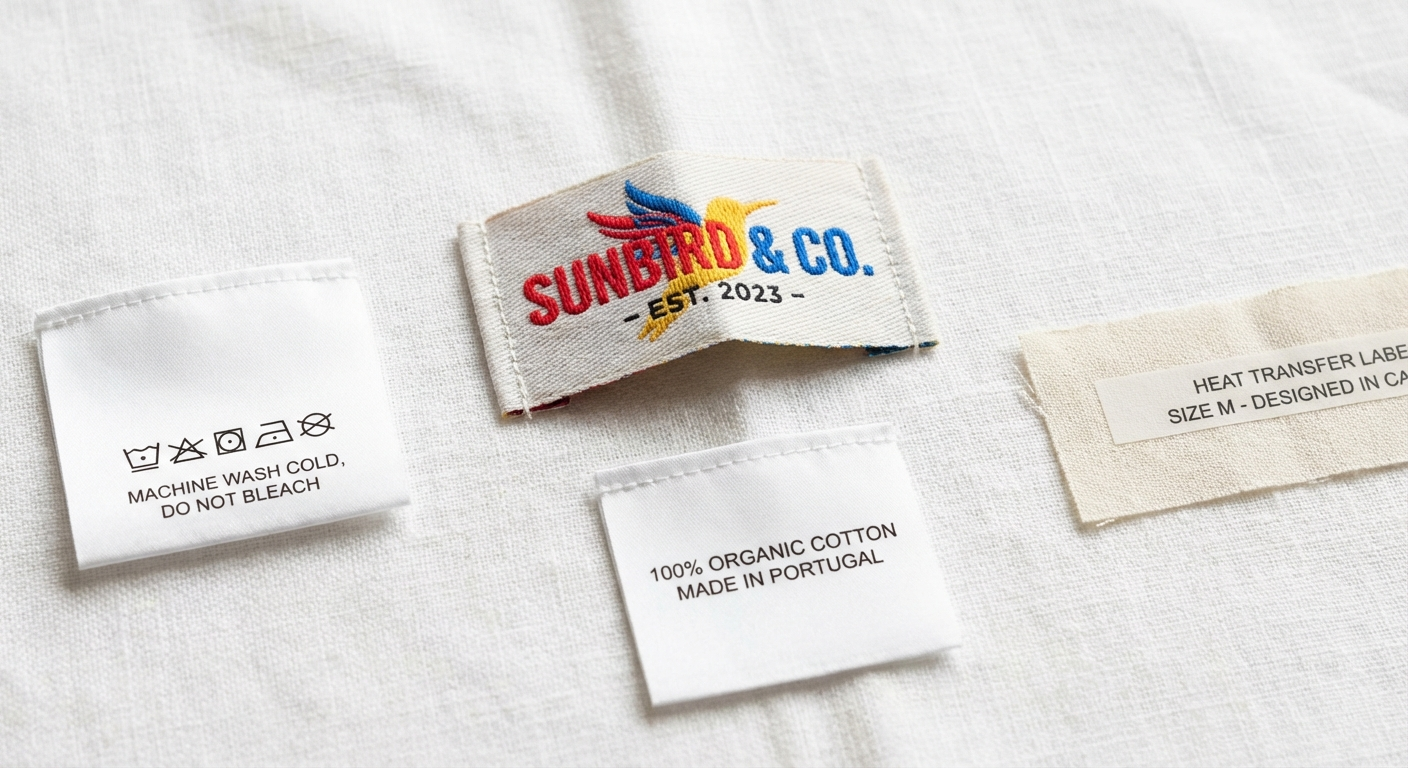
Woven labels are made on modern digital looms. Your design is literally woven into the fabric using colored threads, it's not printed on top, it's part of the material itself. That's why woven labels outlast the garments they're sewn into. They won't crack, peel, or fade with washing.
The texture is immediately recognizable. Pick up any high-end garment and look at the neck label. It's woven. There's a tactile quality to woven labels that printed labels simply can't replicate. Threads have a slight sheen and depth that screams "real brand" in a way customers notice even if they can't articulate why.
Woven labels work for almost every garment type: t-shirts, hoodies, dresses, jackets, hats, bags, even socks and underwear. They come in various fold styles: center fold for neck labels, end fold for hem tags, straight cut for surface application. Woven labels can adapt to virtually any placement.
Best for: Brand main labels, premium positioning, garments that get washed frequently, any situation where long-term durability matters.
Limitations: Woven labels need a minimum thread line thickness of about 2mm, which means very fine text or intricate gradients don't translate well. They're also slightly more expensive than printed labels at very large quantities (10,000+ pieces), though at typical order sizes the price difference is negligible.
Our looms handle up to 8-12 thread colors depending on the weave density. For most logos, that's more than enough. If your design uses gradients or photographic detail, we'd steer you toward dye-sublimation printing on a woven base. Dye-sublimation printing has the same premium fabric feel, with unlimited color capability.
Printed Labels: Versatile and Affordable
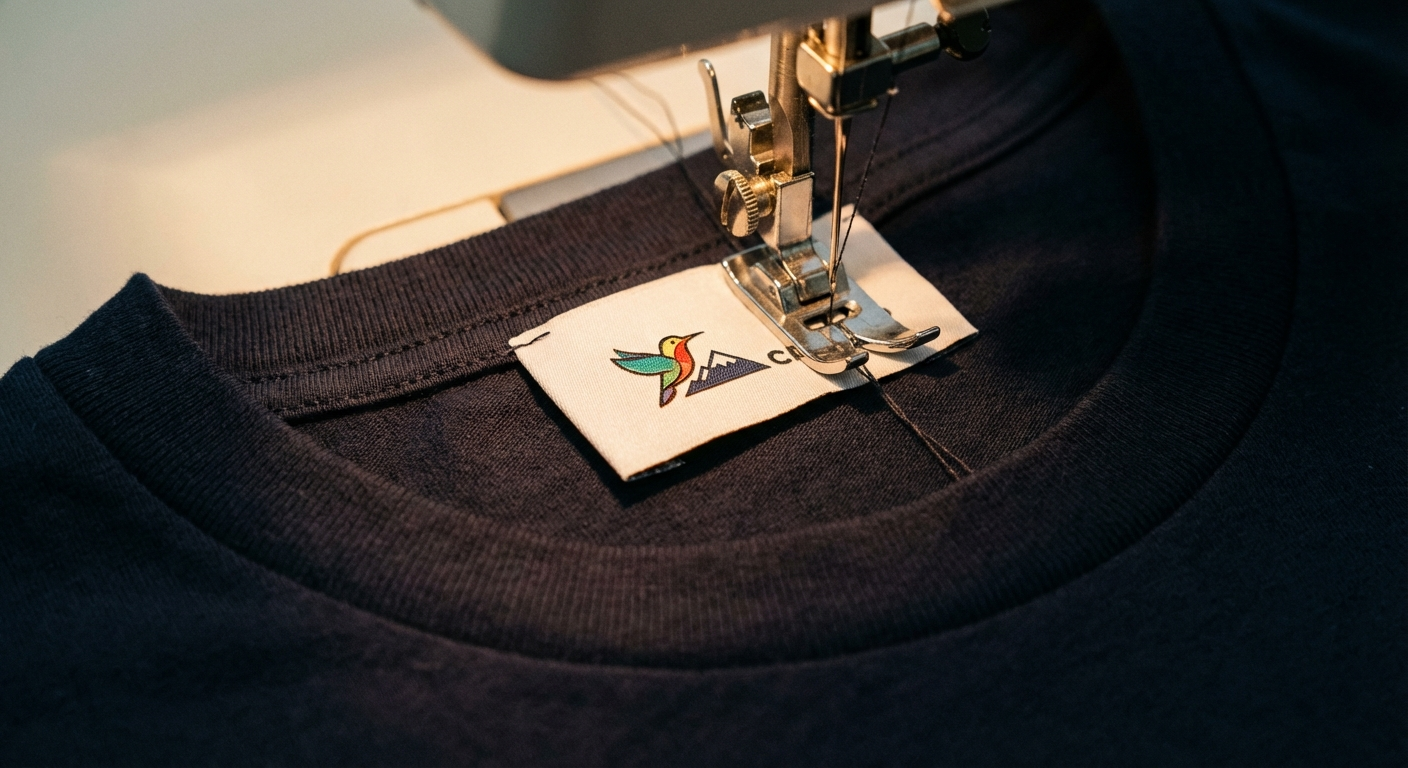
Printed labels apply ink or dye onto a fabric base, typically, cotton or satin. The base material matters as much as the printing method, and there are several combinations worth understanding.
Screen-printed cotton labels have a soft, natural hand feel. The cotton base is matte and breathable, which makes these labels comfortable against skin. They're a strong choice for children's clothing, loungewear, and any brand that emphasizes comfort or natural materials. Screen printing handles up to 4 spot colors on cotton with sharp detail. Text size can go as small as 1mm or 3pt and remain legible.
Printed satin labels have a smoother, shinier surface. Satin is the traditional choice for care labels and content labels because it accepts very small text cleanly. Screen-printing on satin typically uses a single color (black on white satin is the standard), but it's the most cost-effective option at scale. If you need thousands of care labels with washing instructions and fiber content, printed satin is the default.
Dye-sublimation labels use heat to transfer dye into a white polyester woven base. The result looks and feels like a woven label but supports unlimited colors, gradients, even photographs. It's the bridge between the premium feel of woven and the color freedom of digital printing.
Best for: Care/content labels, brands with complex multicolor logos, children's clothing (soft cotton base), budget-conscious startups testing their first label runs.
Limitations: Printed labels will fade faster than woven labels over many wash cycles — the ink sits on top of the fibers rather than being part of them. Screen printing is limited to 4 colors. Satin labels can feel slippery and cold against skin. Cotton printed labels are the most comfortable option but cost more than satin.
Heat Transfer Labels: No Sewing Required
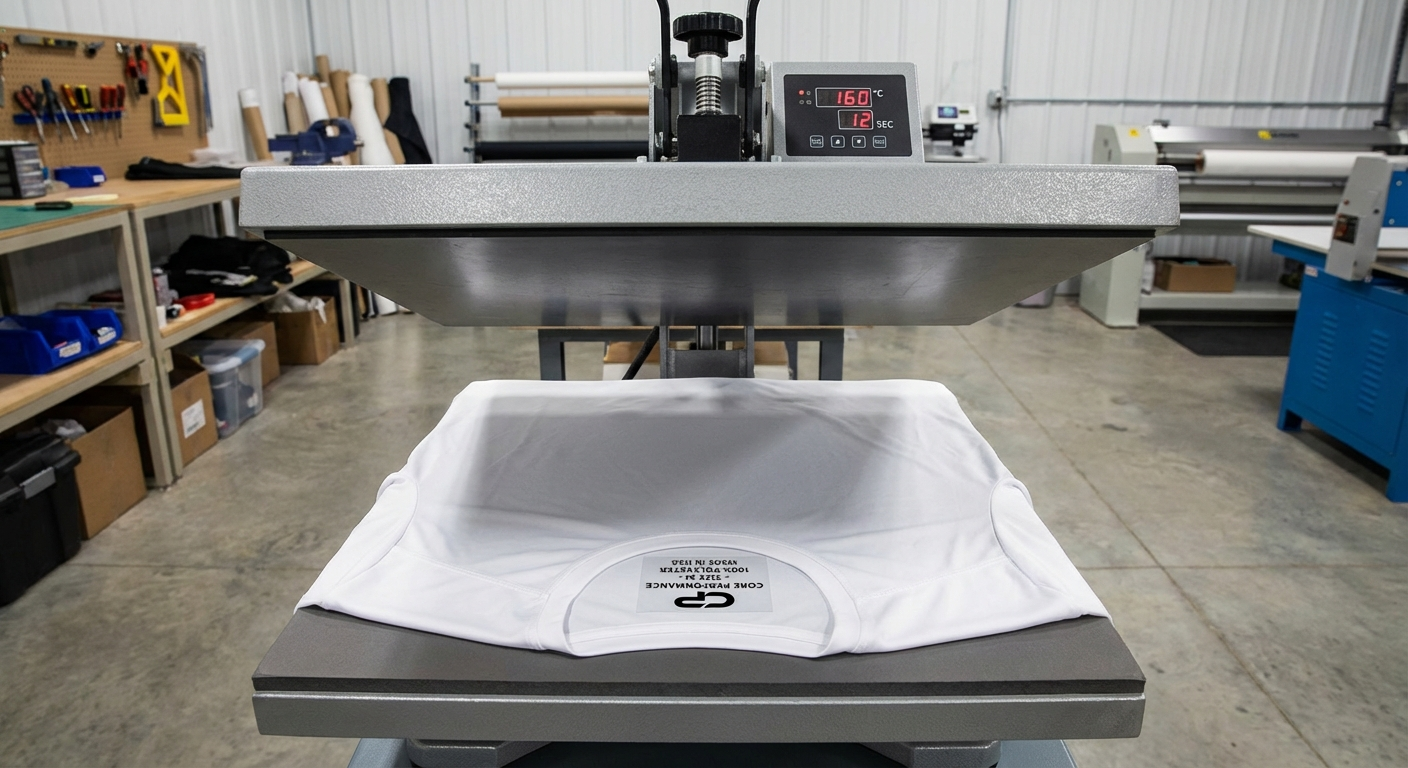
Heat transfer labels are applied with a heat press directly onto the fabric with no sewing, no folding, and no bulk. The label essentially becomes part of the garment surface. For activewear, performance wear, and any application where a sewn-in label would create irritation or visible bulk, heat transfers are the clear winner.
There are two distinct types. Standard (flat) heat transfer labels lay completely flush with the fabric — you can barely feel them. They're what you'll find inside most athletic brands' garments. Raised (silicone) heat transfer labels have a 3D texture that adds a tactile element, similar to a rubberized logo. Both types offer reflective ink options for outdoor and activewear applications where visibility matters.
Best for: Activewear, performance fabrics, brands with "tagless" garments.
Limitations: Heat transfers require a heat press for application, which means your manufacturer needs the equipment and some training. They don't work on all fabrics — very delicate materials like silk or extremely textured fabrics like terry cloth can be tricky. And they can't be repositioned after application; if the placement is off, the garment is compromised.
Matching Label Type to Garment Category
After years of filling orders, clear patterns have emerged in what works best for each garment type:
T-shirts and casual wear: Woven center fold label in the neck. It's the default for good reason. It is durable, clean-looking, and customers expect it. Some brands add a printed cotton care label at the side seam.
Activewear and athletic wear: Heat transfer, full stop. Sewn labels create chafing during movement, and the flat profile of heat transfers disappears inside the garment. This is non-negotiable for performance brands.
Children's clothing: Printed cotton for softness, or heat transfer to eliminate anything that could scratch or irritate. Avoid satin, kids (and parents) find it scratchy.
Dresses and formalwear: Woven satin labels at the waistband or side seam. The sheen of a woven satin label matches the aesthetic of formalwear. Small, elegant, no-fuss.
Outerwear and jackets: Woven labels (often larger format — up to 3" wide) with full branding, sometimes combined with a second woven care label.
Hats and accessories: Woven labels (end fold or straight cut sewn inside the sweatband) or woven patches on the exterior. Some hat brands use small leather or PVC patches instead of traditional labels.
Budget Considerations: Real Numbers
Pricing for custom labels depends on size, colors, quantity, and label type. Without quoting exact numbers (because specs vary so much), here's how the types stack up relative to each other:
At ordered quantities under 1,000 pieces, woven and printed labels are approximately the same price per unit. The gap only becomes meaningful above 10,000 pieces, where printed labels, especially satin, pull ahead on cost.
Heat transfer labels typically cost slightly more per unit than woven labels, but you save on sewing labor since they're applied by heat press rather than by hand or machine stitching. For brands that factor in total applied cost (label + application labor), heat transfers can actually be the most economical option.
Our minimums are 5 pieces for all label types: woven, printed cotton, printed satin, and heat transfer. That's low enough to get physical samples in your hands before committing to a production run of hundreds or thousands.
One Brand, Multiple Label Types
Most established clothing brands don't use just one label type. A typical setup might include a woven brand label in the neck, a printed satin care label at the side seam, and a woven hang tag attached to the exterior. Each label serves a different purpose and faces different performance requirements.
Start with your primary brand label — that's the one customers see first and the one that defines your brand perception. Get that right. Then layer in care labels, size labels, and exterior branding as your line grows. You don't need to figure out all of it at once.
Need help choosing? Request a free quote and tell us about your garments, your brand, and your timeline. We'll recommend the right label type. With minimums starting at just 5 pieces, you can order samples of multiple types to compare them side by side before committing. Explore all our label options here.
The information below is required for social login
Sign In
Create New Account