


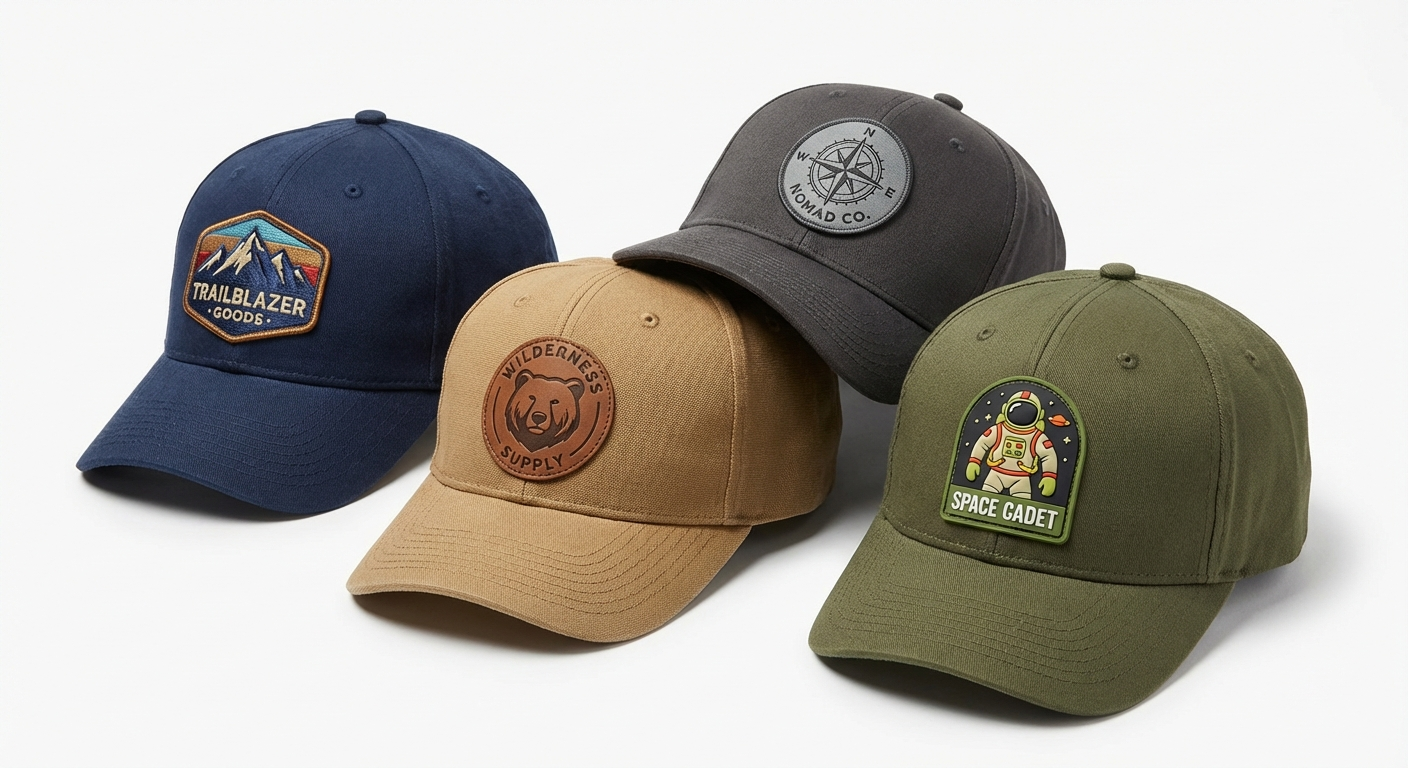
Walk through any streetwear shop, outdoor retailer, or craft fair in 2026 and you'll notice the same thing: patches on hats are everywhere. Not iron-on novelty patches from the clearance bin — we're talking about custom-designed, professionally manufactured patches that serve as the primary branding element on caps, snapbacks, beanies, and bucket hats.
The hat patch trend isn't new, but it has matured. Five years ago, most brands defaulted to direct embroidery on the hat itself. Today, more and more brands are choosing to apply a separate patch because it gives them better design control, more material options, and a premium dimensional look.
The question isn't whether to put a patch on your hat. It's which kind.
Why Hat Patches Instead of Direct Embroidery?
Before we compare patch types, it's worth understanding why patches have overtaken direct embroidery as the go-to hat branding method for so many brands.
Consistency. When you embroider directly onto a hat, the result depends on the hat's material, the stabilizer used, and the machine operator's setup. Stitch the same design on a cotton twill cap and a mesh trucker hat, and you'll get two noticeably different results. A patch, on the other hand, is produced separately under controlled conditions. Every patch in your order looks identical, and you simply sew or heat-apply it to whatever hat style you want.
Design flexibility. Direct embroidery has real limitations. Fine text below 3mm tends to get lost. Gradients don't work. Thread color changes add cost and production time. With a patch — especially a woven or PVC patch — you can achieve much finer detail, tighter text, and more complex color combinations.
The premium factor. A well-made patch adds a tactile, three-dimensional element to a hat that flat embroidery simply doesn't have. Leather patches, in particular, communicate a level of craftsmanship that resonates with consumers who are willing to pay more for products that feel considered and intentional.
Embroidered Patches: The Classic Choice
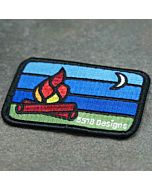
Embroidered patches are what most people picture when they hear the word "patch." Thick thread stitched onto a twill backing, with a merrow border that gives the edges a clean, finished look. They've been the standard for military insignia, sports teams, motorcycle clubs, and workwear brands for decades, and they remain the most popular choice for hat applications.
What they do well on hats: Embroidered patches shine when your design is bold, graphic, and uses 8 or fewer colors. Think chunky logos, block lettering, simple icons. The raised texture of the embroidery thread catches light and creates a depth that looks great on structured caps like snapbacks and trucker hats. They're durable, washable, and the thread colors stay vibrant even after heavy use.
Where they struggle: Fine detail. If your logo includes small text (think taglines under 3mm or 8 pt), thin lines, or intricate patterns, the thread width becomes a limiting factor. Each stitch has a physical thickness, and cramming too much detail into a small embroidered patch results in a muddy, indistinct design. Embroidered patches also tend to be the thickest option, which can feel bulky on softer, unstructured hats like beanies or dad caps.
Best for: Outdoor brands, sports teams, workwear lines, military/tactical brands, and any design with bold, graphic elements. If your logo is clean and simple, embroidered patches will look fantastic on virtually any hat.
Minimum order: 5 pieces. That's low enough to test a design before committing to a larger run.
Woven Patches: For Detail and Precision
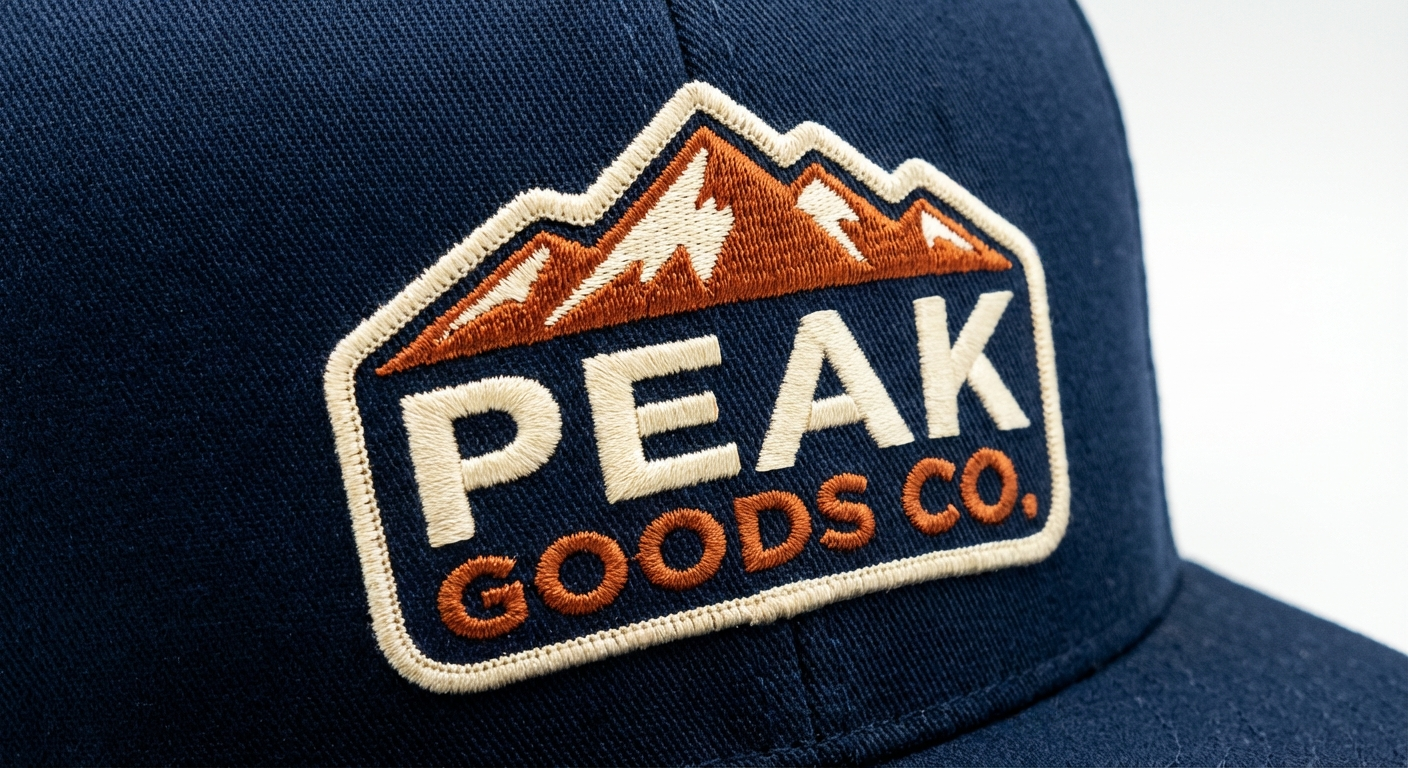
Woven patches are the detail-oriented cousin of embroidered patches. Instead of stitching thread on top of a backing material, woven patches are created on a loom where the design is woven directly into the fabric. The result is a thinner, smoother patch with noticeably sharper detail.
What they do well on hats: If your brand identity relies on fine lines, small text, or intricate patterns, woven patches are the better choice over embroidered. The thinner thread used in weaving allows for text as small as 2mm or 5pt to remain legible. Woven patches also sit flatter against the hat surface, which gives them a sleeker, more refined appearance. On a structured 5-panel cap or a flat-brim snapback, a woven patch looks incredibly clean.
Where they struggle: Woven patches lack the pronounced three-dimensional texture of embroidered patches. If your brand aesthetic leans toward a rugged, tactile, heavy-duty feel, a woven patch might look too "flat" for the vibe you're going for. They also max out at 8-12 thread colors depending on the loom, so extremely colorful or gradient-heavy designs may need a different approach.
Best for: Fashion-forward streetwear brands, minimalist logos, detailed crests or coat-of-arms designs, any brand where the logo includes fine typography. Woven patches are a great option for premium headwear.
Minimum order: 5 pieces.
Leather Patches: Premium and Distinctive
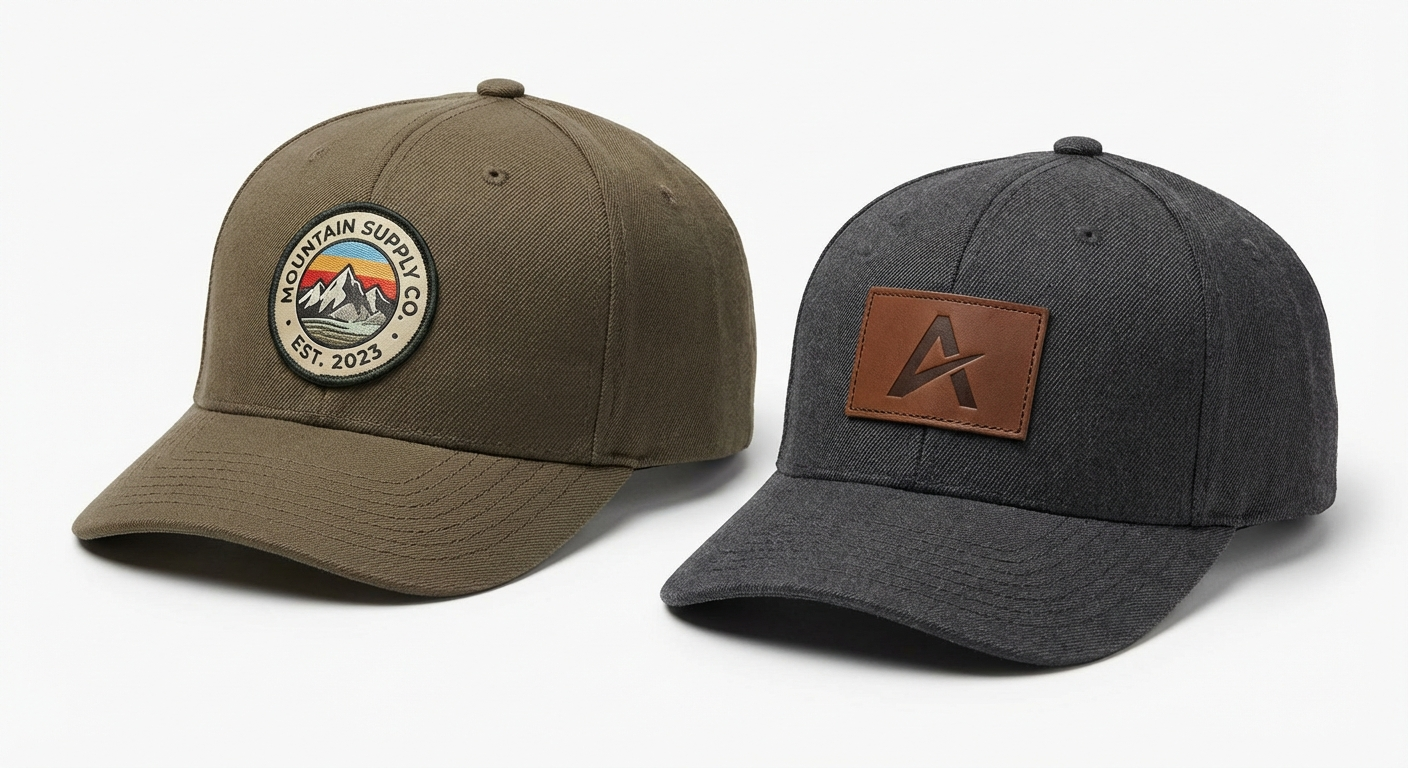
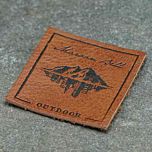
Nothing says "premium" on a hat quite like a leather patch. Whether it's genuine leather or high-quality faux leather, the material immediately communicates craftsmanship and attention to detail. Leather patches are debossed (pressed into the leather), embossed (raised), or printed, and each method produces a distinct look.
What they do well on hats: Leather patches dominate in the premium hat space. Outdoor brands, ranch and western wear companies, craft breweries, and lifestyle brands gravitate toward leather because it ages beautifully. A leather patch on a waxed cotton cap develops character over time — the kind of distressing that makes customers feel like the hat becomes more "theirs" with every wear. Debossed leather patches have a subtle, tonal quality that feels sophisticated without being flashy.
Where they struggle: Color options are limited compared to embroidered or woven patches. Debossed leather is essentially a single color — the leather itself — with the design defined by depth rather than color contrast. Adding ink can add tonal variation and can be customized with a variety of ink colors, however, if your logo relies heavily on specific brand colors, leather may not reproduce it faithfully. Leather patches also have a higher minimum order — typically 50 pieces — which makes small test runs more expensive.
Best for: Outdoor and adventure brands, western and ranch wear, craft beverage companies, premium lifestyle brands, and anyone who wants their hats to feel like a high-end product. Leather patches also work exceptionally well for corporate gifts and event merchandise where perceived value matters.
Minimum order: 50 pieces.
PVC Patches: Bold, Waterproof, and Modern
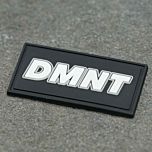
PVC (polyvinyl chloride) patches — sometimes called rubber patches — bring a completely different aesthetic to hats. They're made from soft, flexible rubber material that's molded into a 2D or 3D shape. The result is a patch with vivid colors, clean edges, and a slightly industrial feel that works perfectly for tactical brands, outdoor gear, and streetwear.
What they do well on hats: PVC patches are essentially waterproof. Rain, sweat, mud — nothing affects them. This makes them ideal for performance headwear, fishing hats, hiking caps, and military/tactical gear. The molding process allows for precise detail and consistent color reproduction, and PVC patches maintain their appearance after years of abuse. They also have a distinctive tactile quality — smooth and slightly rubbery — that feels modern and intentional.
Where they struggle: PVC patches have a specific aesthetic that doesn't fit every brand. They look great on a tactical snapback or a fishing trucker hat, but they might feel out of place on a delicate linen bucket hat or a preppy baseball cap. The material also doesn't breathe, so on larger patches, the area underneath won't ventilate — not a huge issue for hats, but worth noting. Minimum orders are higher at 100 pieces, and per-unit cost is generally above embroidered or woven patches.
Best for: Tactical and military-inspired brands, outdoor performance gear, fishing and hunting brands, streetwear with an industrial edge, and any brand that needs patches to withstand harsh conditions. If your customers are wearing your hats in the rain, on a boat, or on a trail, PVC is built for that.
Minimum order: 100 pieces.
Choosing the Right Patch for Your Hat Brand
The "best" hat patch doesn't exist in the abstract — it depends entirely on your brand positioning, your logo's complexity, your budget, and where your customers will be wearing the hats.
If you're launching a new hat line and want to test the market, start with embroidered or woven patches at 5 pieces. See how the product looks, how customers respond, and then scale. If you already know your aesthetic leans premium, go straight to leather. If your customers are fishermen, hunters, or tactical gear enthusiasts, PVC is the obvious play.
Many brands use multiple patch types across different hat styles in their line. An outdoor brand might use leather patches on their premium waxed cotton caps, embroidered patches on their trucker hats, and PVC patches on their waterproof fishing hats. Using different patch materials across styles creates visual variety while maintaining brand consistency.
Need help choosing? Browse our full custom patch collection or request a free quote with your artwork. We'll recommend the right patch type for your design, suggest sizing for your specific hat style, and produce a sample before you commit to a full run. Minimums start at just 5 pieces for embroidered and woven patches.
The information below is required for social login
Sign In
Create New Account