


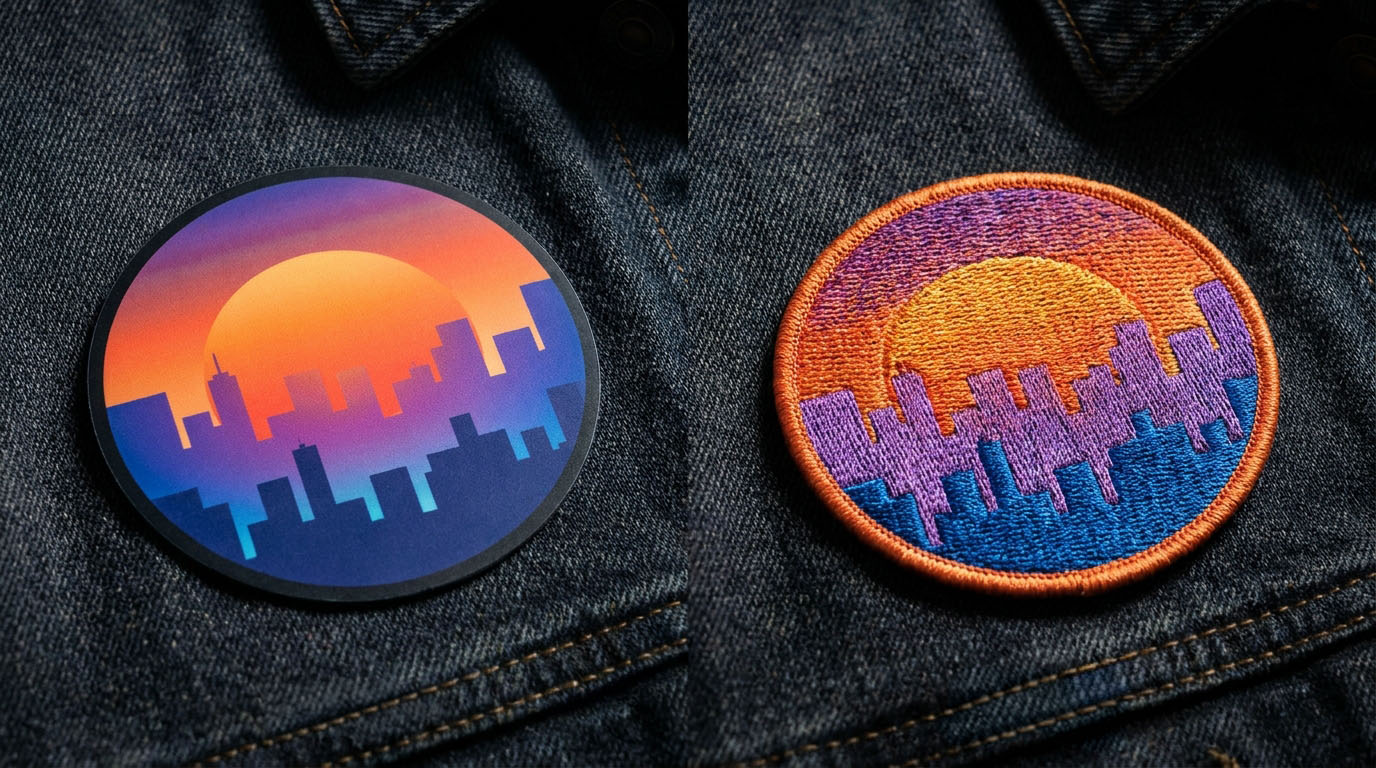
The patch game has evolved. What started as simple embroidered designs has exploded into a world of printing methods, each with its own aesthetic and purpose. Two methods dominate the modern patch landscape: sublimation printing and traditional embroidery.
Both options offer the same level of high end visual impact and can add a whole new feel to your brand or brands. Each offers unique features that work well for different purposes and our team will help you choose which option is right for you.
We've been manufacturing patches since 2008, working with streetwear brands, fashion startups, and independent designers who demand nothing less than perfection. Here's the comparison between sublimation and embroidery.
Traditional Embroidery: The Foundation
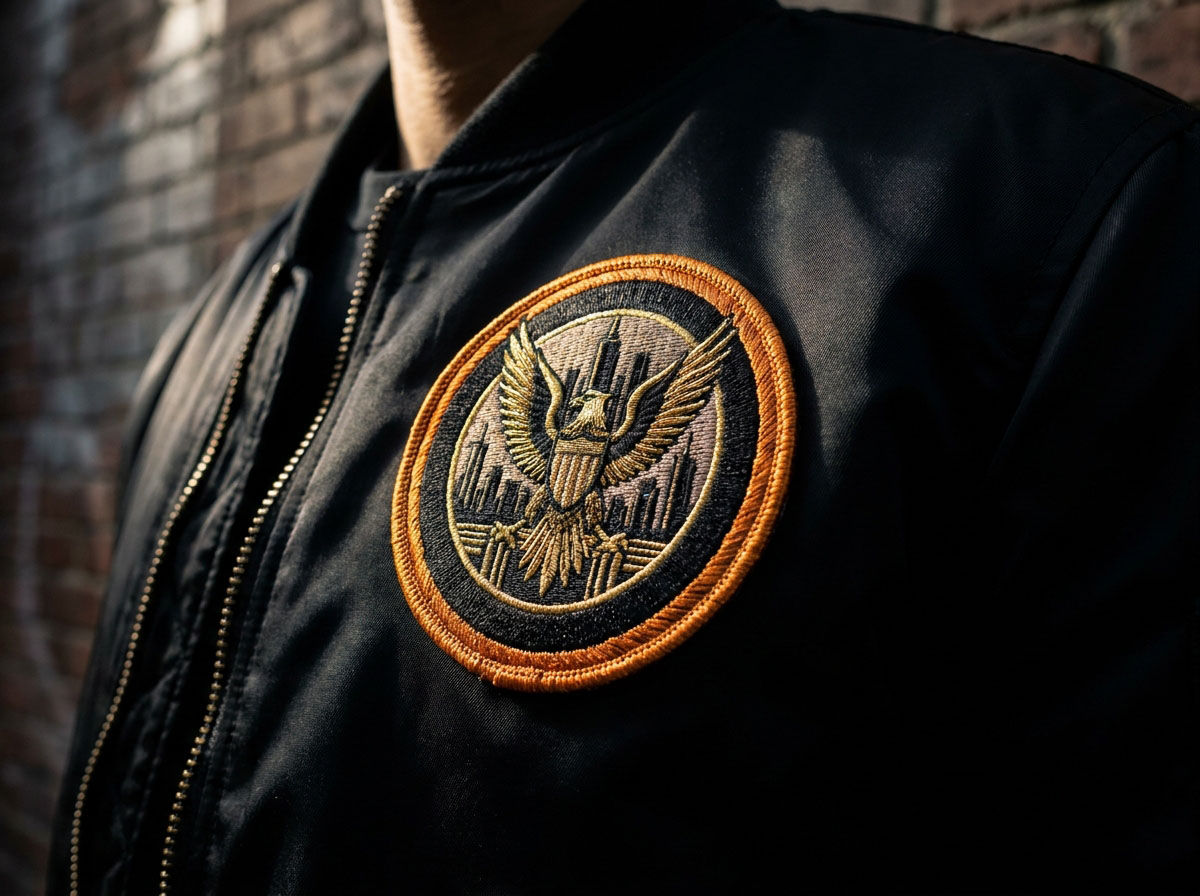
Embroidered patches are the foundation of patch culture, thread stitched into fabric, raised texture, colors that pop. There's a reason this method has dominated for decades, it's classic and bold.
Embroidery creates dimension. The raised thread catches light differently than flat printing, giving designs depth and texture. Run your fingers across quality embroidery and you can feel the craftsmanship that has been perfected over centuries. That tactile element matters more than most brands realize.
The process uses polyester or rayon thread stitched into a twill backing at up to 15,000 stitches per minute. Quality embroidery achieves thread density between 0.4-0.6mm, creating solid color coverage without base material showing through. Lower densities result in a lower quality result, while higher densities could pucker the fabric or base material.
Traditional embroidery excels at bold graphics, text, and designs with clean lines like the following: logos, wordmarks, and geometric patterns. Dyed threads retain color very well and stay true wash after wash. Embroidered patches can actually improve with age as threads settle and soften.
There are limitations to the embroidery process. The embroidery threads are thick, and fine details can get lost in the design when translated from digital to embroidery. Gradients are hard to replicate and photographic elements often look muddy or blurred together. If your design has some of these elements, embroidered patches may not be the best fit; that's where sublimation comes in.
Sublimation Printing: The Game Changer
Sublimation printing completely changed how we thought about creating custom patches with intricate and detailed designs. The sublimation process utilizes heat and pressure to bond ink directly to the polyester fabric fibers, dyeing the fabric with the digital design.
The process starts with special sublimation inks printed onto transfer paper. Heat presses bond the ink into polyester fabric at 400°F, turning solid ink directly into gas that penetrates fabric fibers and dyes the fabric with the design.
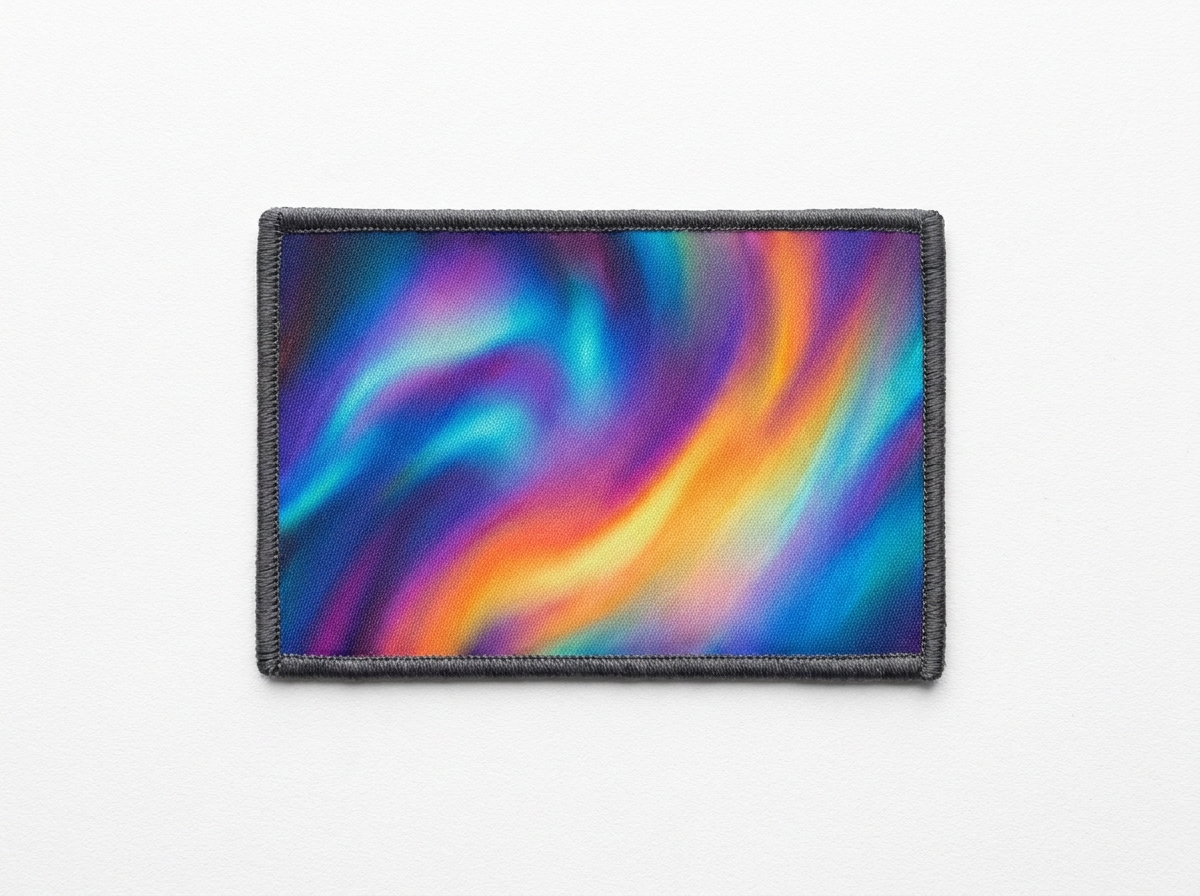
Custom sublimated patches are the best when it comes to reproducing photographic images, complex gradients, and fine text that embroidery cannot. The print quality of these patches rivals that of digital photos all on a durable patch fabric that adds an additional texture element.
Embroidery typically maxes out around 12 thread colors per design, however, sublimation can reproduce a full spectrum of color in a single print. This makes sublimation the best option when working with a full range of color in designs.
Sublimation patches feel different than embroidery. The surface stays flat and smooth with a slight texture matching that of a woven label or fabric. Colors appear vibrant but without the dimensional quality of raised embroidery thread. For some applications, this flat profile is actually preferred.
Texture and Feel Comparison
Embroidered patches utilize the added element of texture in the embroidery process. Raised surfaces, varying thread heights, and even twill backing fabrics give definition and are used to create a unique look and feel to design translated from digital screen to physical patch. Where there are limitations to colors, our team uses texture, and stitch direction and types to create dimensions and depth.
Sublimation Patches, on the other hand, utilize and use texture differently and create a different textural feel. The printing process does not add any additional texture or dimension to the patch and the design sits flat at fabric level.
Consider the end use for the patches when deciding based on texture. Embroidered patches work better on thicker, heavier fabrics like denim or canvas, the added dimension and depth adds to the overall look. Sublimated patches are great for technical fabrics where a flat profile may be preferred to avoid snagging or bulk.
Design Complexity and Detail Capabilities
The complexity of the design being produced will determine which method is best. Both embroidered and sublimated patches have limitations and planning accordingly prevents expensive redos and disappointing results.
Embroidery handles bold, simple design exceptionally well. Text larger than 6mm reproduces clean and clear and geometric shapes, logo, and high-contrast graphics translate perfectly. The added texture and dimension make simpler designs pop. However, with the embroidery process, complex designs are trickier. Fine detail disappears in thread thickness, small text becomes illegible, and photographic elements can look muddy and blurred.
Sublimated patches solve some of these issues. Photographic reproductions, fine text, complex gradients, and unlimited color designs all work perfectly and the printing process captures details of digital photography perfectly.
Color Accuracy and Vibrancy
Color performance varies between each of these patch types. Embroidered and Sublimated patches offer advantages in different situations.
Embroidery uses solid physical thread colors that remain the same across multiple production runs. Thread colors appear rich and saturated, especially in direct lighting.
The thread construction can create interesting color effects that don't appear with printing. Overlapping threads produce subtle color mixing. Different stitch angles can change how colors catch light, and metallic thread accents can add a shiny reflective element.
However, embroidery color options are limited to available thread color stock. While custom color matching can be done, it requires minimum quantities that many brands can't justify and comes at a higher price point.
Sublimation offers unlimited color options within the RGB spectrum. Custom color matching happens during the printing process with no minimum quantities. Gradients, shadows, and subtle color transitions all reproduce perfectly.
Application Methods and Attachment
All of our backing options are available on both embroidered and sublimated patches but some backings may be affected slightly by the product type.
Iron-on backing works well for both patch types. The heat-activated adhesive creates a strong bond that survives regular washing. However, sometimes, embroidered patches may require longer pressing times due to the thread thickness affecting heat transfer.
Sew-on method provides the most permanent option for both embroidered and sublimated patches. Embroidered patches may even sew easier due to thread perforation in the backing material during production. Sublimated patches require more careful needle placement than embroidered to avoid damaging the fabric.
The peel and stick backing offers quick application for temporary or short-term use. It is a great tool for the application process, holding the patch in place on garments or accessories for sewing.
Velcro® backing creates removable patches perfect for gear, uniforms, and applications requiring frequent patch swap outs changes. Both embroidery and sublimation work with Velcro backing, though embroidered patches sometimes require backing reinforcement due to thread tension.
Making the Right Choice
Choose embroidery when working with simpler designs. Bold logos, text-heavy design, and traditional applications all benefit from the dimensional qualities of embroidery. Embroidered patches work best for brands who want to emphasize classic craftsmanship and traditional quality. The tactile and visual richness stand out creating a striking and eye catching product.
When working with highly complex designs that demand photography detail, go with sublimated patches. Complex artwork, gradients, fine text, and unlimited color designs are what sublimation is meant for!
Go fully unique and custom with a hybrid approach. Sometimes for designs to translate the best, we can do a hybrid of sublimated and embroidered elements. This allows us to mix the benefits of both methods and avoid the negatives.
The Bottom Line
Sublimation and embroidery deliver professional results when matched to appropriate applications. The key is understanding your design requirements, brand positioning, and end use before committing to either method.
Skip the guesswork and work with a manufacturer who understands both methods and can recommend the best approach for your specific needs. Quality matters more than method – poorly executed embroidery or sublimation will disappoint regardless of which process you choose.
Ready to create patches that actually pop? Get started with free quotes and professional design guidance. Our minimums start at just 5 pieces, so you can test approaches before committing to large orders.
The information below is required for social login
Sign In
Create New Account