


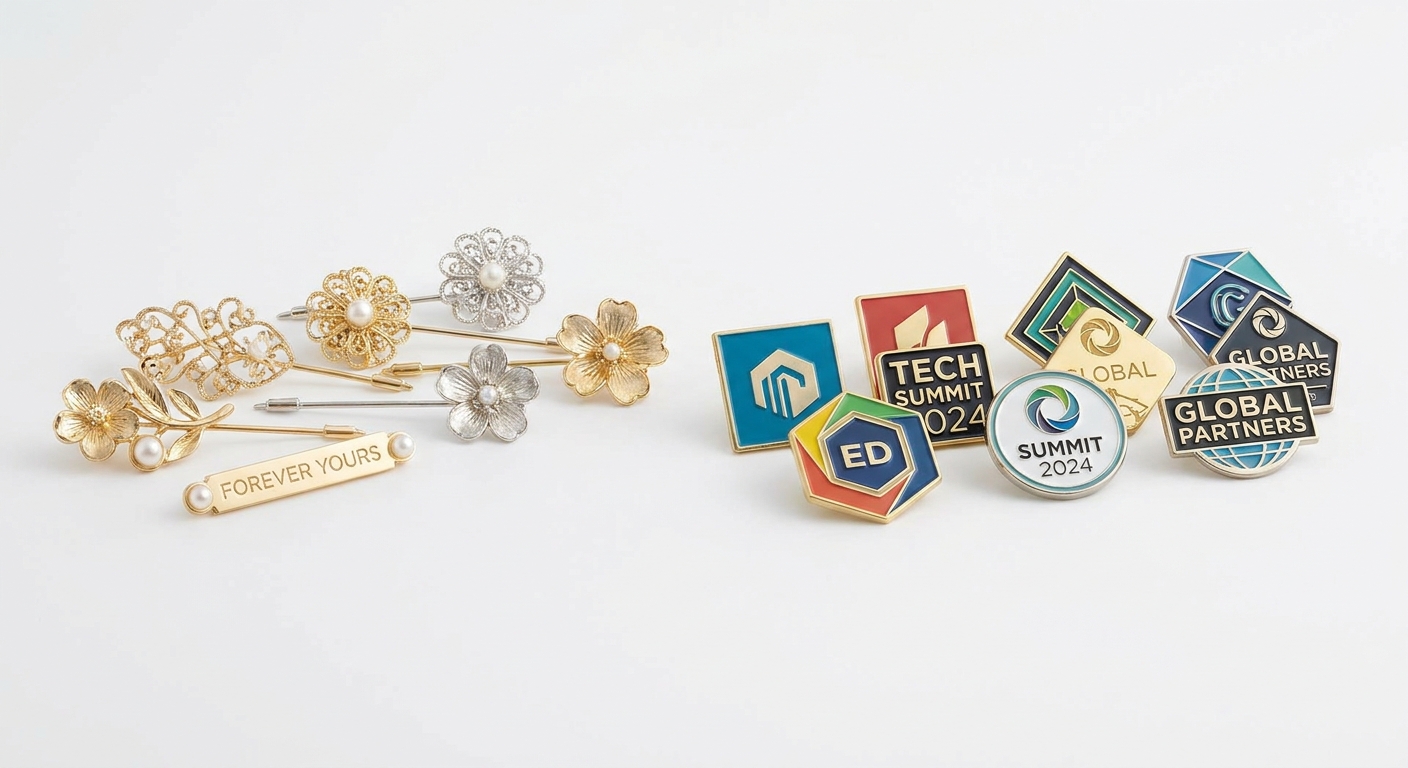
The conference badge hanging from every attendee's lanyard tells only half the story. The small enamel pin next to it is where the real networking magic happens.
We've produced custom pins for everything from 50-person startup conferences to 15,000-attendee industry conventions. Wedding parties that want matching lapel pins. Product launches where the promotional pin becomes more valuable than the actual product being announced. Trade shows where competitors try to collect each other's pins like trading cards.
What we've learned is that custom pins work differently than other promotional items. People don't just accept them politely and forget about them. They wear them. They collect them. They start conversations about them. Used strategically, a custom pin becomes a badge of belonging that extends your event's impact far beyond the actual event date.
Why Events Need Custom Pins
Most event planners think about pins too late in the process. They've locked down the venue, finalized the catering, printed the programs, and then someone mentions "wouldn't custom pins be nice?" By then, they're usually stuck with rush production and limited design options.
The smart event planners think about pins early because they understand their unique psychological impact. A pin is something attendees choose to display on their person. It's not hidden in a conference bag or stuck on a laptop. It's visible, public, and personal.
Pins create instant community. At large events, spotting someone else wearing your pin creates an immediate connection point. Conference attendees use them to identify fellow first-timers, workshop graduates, or VIP track participants.
They extend event visibility beyond the event. Unlike t-shirts that get relegated to sleepwear or tote bags that get stuffed in closets, pins get attached to jackets, backpacks, and lanyards that people wear regularly. Your event branding continues working months or even years later.
Pins encourage repeat engagement. Many annual events create collectible pin series. Attendees return partly to complete their collection. Tech conferences especially have embraced this and some attendees have built entire pin collections that tell the story of their professional development.
Conference Pins That Actually Work
Most conference pins fail because they try to cram too much information onto a small surface. Company logo, event name, year, location, hashtag — the result looks like a tiny billboard instead of something people want to wear.
Successful conference pins follow the "one clear message" rule. The 2023 DockerCon pin featured just the Docker whale icon in glow-in-the-dark enamel. No text, no date, no location. But everyone who attended that conference immediately recognizes it, and people still wear it to other tech events.
Size matters for conference settings. Standard 1.25-inch pins work well for most conference applications, they are large enough to be visible from conversation distance but not so large they dominate a lanyard or lapel. Smaller 1-inch pins work for multi-pin collections where attendees might wear several at once.
Color psychology affects networking outcomes. Bright, distinctive colors make conference pins easy to spot across crowded expo halls. Blue suggests trustworthiness, perfect for financial or healthcare conferences. Green works well for sustainability or outdoor industry events. Red creates urgency and excitement which is ideal for sales conferences or product launches.
Consider the conference environment. Outdoor events need durable hard enamel finishes that won't scratch or fade in sunlight. Multi-day conferences benefit from lightweight designs that won't weigh down lanyards. Evening networking events allow for more elaborate designs with multiple colors or special finishes.
We typically recommend hard enamel construction for conference pins because they photograph well for social media and maintain their appearance through multiple wears. The smooth, professional finish reinforces the quality of your event brand.
Wedding Pins: Making Moments Memorable
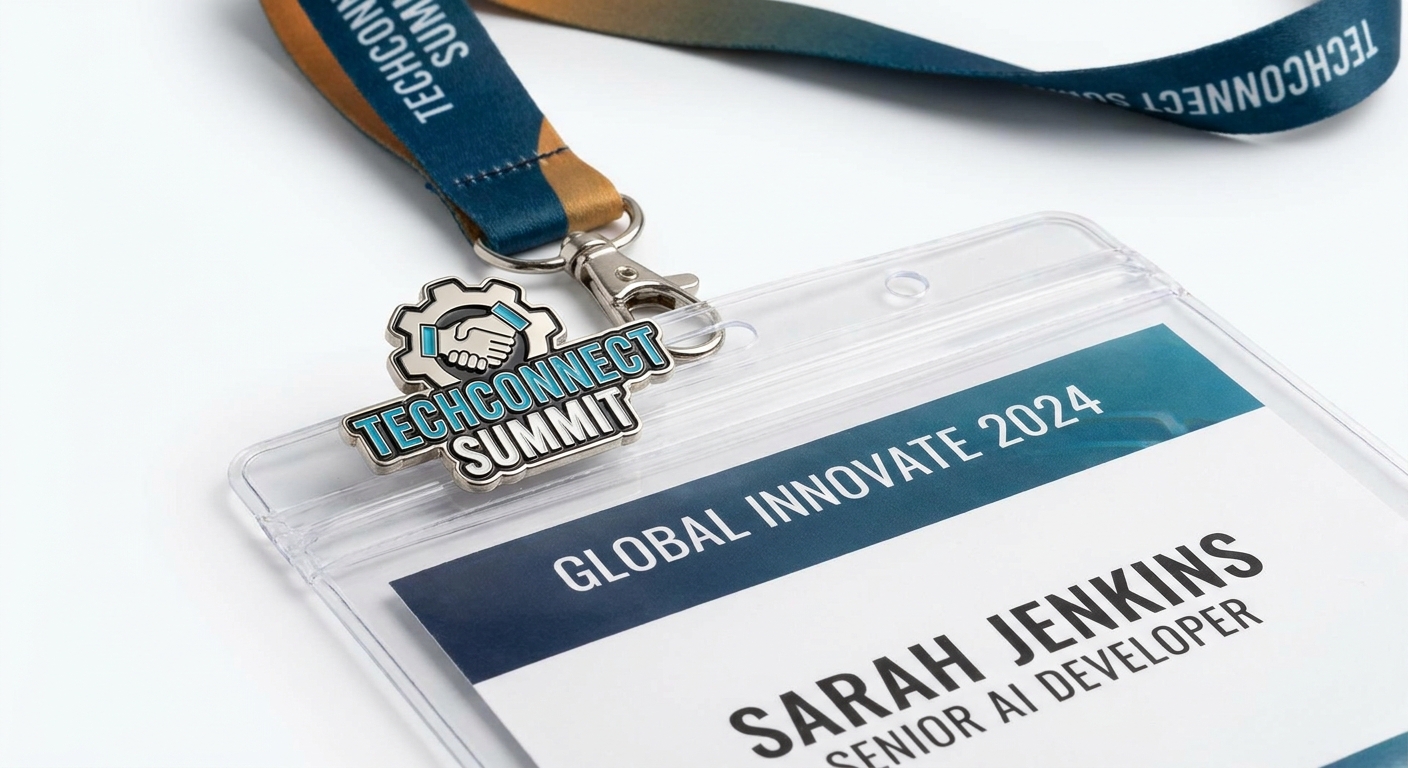
Wedding pins serve a completely different function than conference pins, but they've become surprisingly popular over the last five years. They're especially useful for large weddings where guests might not know everyone or for destination weddings where traditional reception line introductions aren't practical.
Wedding role identification. Instead of flowers or ribbons, some couples use custom pins to identify wedding party members, immediate family, or special guests. "Bride's College Friends," "Groom's Coworkers," "Family Friend." It sounds formal, but it actually makes introductions more natural and helps guests find common ground for conversation.
Memorial and remembrance pins allow couples to honor deceased family members or friends in a subtle, personal way. A small pin with dates or initials lets wedding party members carry that person's memory throughout the ceremony and reception.
Cultural or theme integration. Destination weddings often feature pins that reflect the location. A small cactus design for desert weddings, lighthouse pins for coastal ceremonies, or mountain silhouettes for mountain views are all examples of designs that fit with the environment of the wedding. These become treasured keepsakes that remind guests of both the wedding and the location.
For wedding applications, we usually recommend soft enamel construction with antique finishes. The slightly vintage feel matches the formal, traditional nature of most wedding celebrations. Gold and silver finishes photograph beautifully in wedding albums and coordinate with most wedding color schemes.
Promotional Pins That Build Brand Loyalty
Corporate promotional pins work when they feel like rewards rather than advertisements. The most successful promotional pin campaigns create exclusivity and insider status rather than just pushing brand messages.
Product launch pins work especially well in tech and gaming industries where collecting limited edition items is already part of the culture. Apple's internal pin collection is legendary among employees.
Achievement recognition pins motivate employees and customers simultaneously. Software companies create pins for completing certification programs. Fitness brands recognize customers who hit specific goals. Sales teams earn pins for hitting quarterly targets. The key is making the achievement meaningful enough that people want to display it.
Trade show exclusivity creates buzz when done strategically. Some companies produce limited quantities of special trade show pins. By day two, attendees are specifically seeking out your booth to see if any pins remain. It transforms your giveaway into a collectible.
Customer loyalty programs increasingly include pin rewards alongside traditional point systems. Coffee shops give pins for trying new seasonal flavors. Bookstores recognize customers who attend a certain number of author events. Outdoor gear companies reward customers who submit photos from specific hiking trails or camping locations.
The most effective promotional pins follow the "80/20 rule" — 80% of the design should feel like something people want to wear, 20% should identify your brand. A hiking gear company might create a pin featuring a beautiful mountain silhouette with their small logo tucked discretely on the edge.
Design Considerations for Different Event Types
Each event type demands different design approaches, but some principles apply universally:
Readability at arm's length — Your pin should communicate its core message from 3-4 feet away. Detailed artwork that requires close inspection doesn't work in social situations.
Color contrast for visibility — Light colors on dark backgrounds or vice versa. Avoid color combinations that blend together under typical indoor lighting.
Timeless vs. dated elements — Include elements people will want to wear long-term. Event hashtags and specific dates usually make pins feel outdated quickly.
For conferences, prioritize professional appearance and clear branding. Clean fonts, classic color schemes, and quality finishes that reflect your industry standards.
For weddings, emphasize beauty and personal meaning. Romantic color palettes, elegant fonts, and finishes that coordinate with wedding decor and photography.
For promotional events, balance brand visibility with personal appeal. What would make someone proud to wear this pin six months from now?
Production Planning and Order Timing
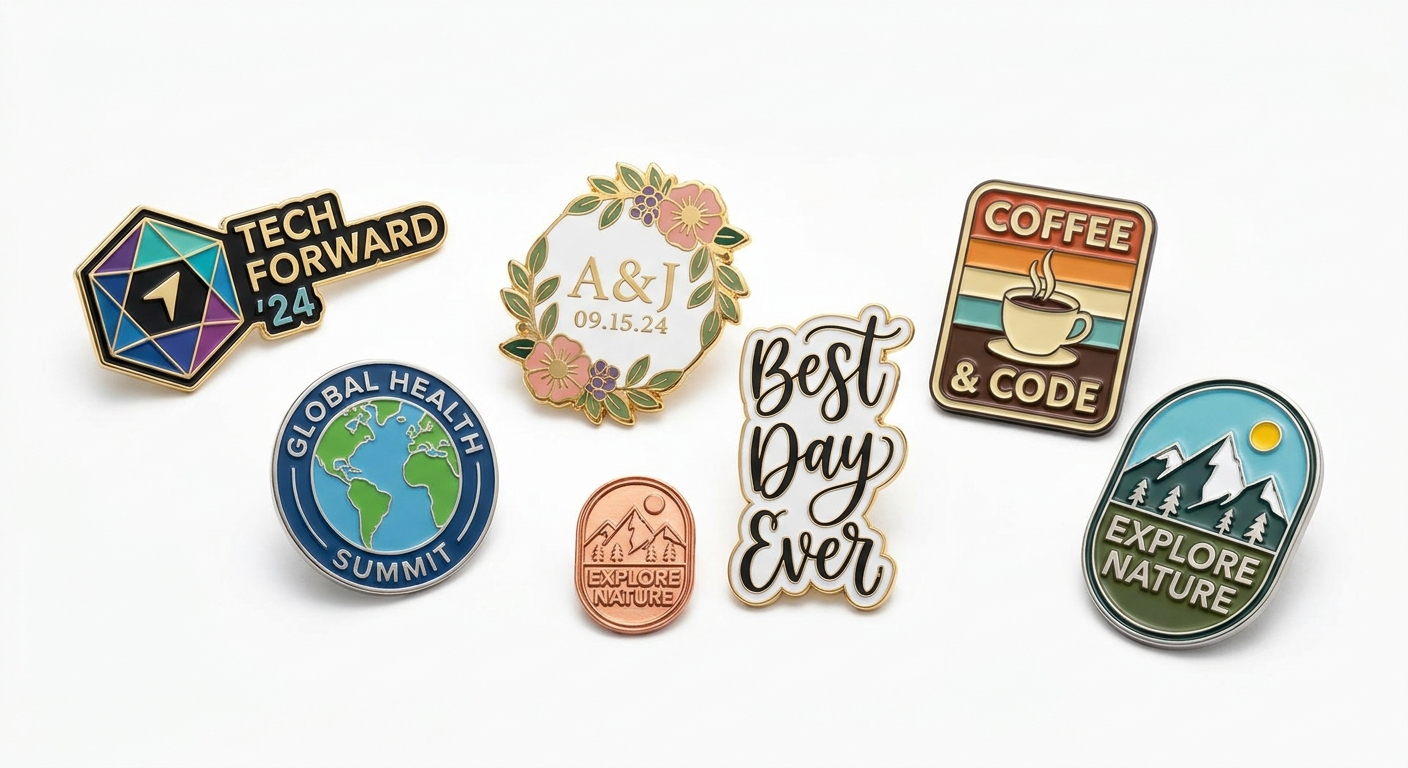
Custom pins require longer lead times than most event planners expect, especially for events with fixed dates that can't be delayed for late deliveries.
Standard production timeline: 15-20 business days for quantities under 1,000 pieces. Add 3-5 days for complex designs with multiple colors or special finishes.
Quantity planning: Most events over-order pins by 15-25% to account for VIP requests, last-minute attendee additions, and replacement needs. Leftover pins often become valuable marketing materials for future events.
Shipping considerations: Events held in hotels or temporary venues require careful coordination of delivery timing and receiving capabilities. Many venues can't accept deliveries more than 1-2 days before an event.
Making Your Event Pins Count
The difference between memorable custom pins and forgettable ones usually comes down to purpose and planning. The best event pins feel integral to the experience, not like afterthoughts.
Think about your pin's life beyond the event. Will attendees want to wear it to other industry events? Does it tell a story about their experience or achievement? Will it start conversations that benefit both the wearer and your organization?
Consider the unboxing or distribution experience. Pins presented in custom packaging feel more valuable than pins handed out in plastic bags. Some events create pin exchange activities where attendees trade with organizers or each other.
Plan for collection and curation. If this is an annual event, think about how this year's pin relates to previous years. Can you create a series that builds loyalty and encourages repeat attendance?
Custom pins work because they tap into fundamental human psychology — the desire to belong, to display achievements, and to start conversations. When event organizers understand this psychology and design accordingly, pins become powerful tools for building community and extending event impact.
Whether you're planning a 50-person workshop or a 5,000-person conference, custom pins can amplify your event's success. The key is thinking beyond decoration and focusing on the human connections your pins can facilitate. With our 25-piece minimums and fast turnaround on most designs, it's easier than ever to test pin strategies for your next event.
The information below is required for social login
Sign In
Create New Account