


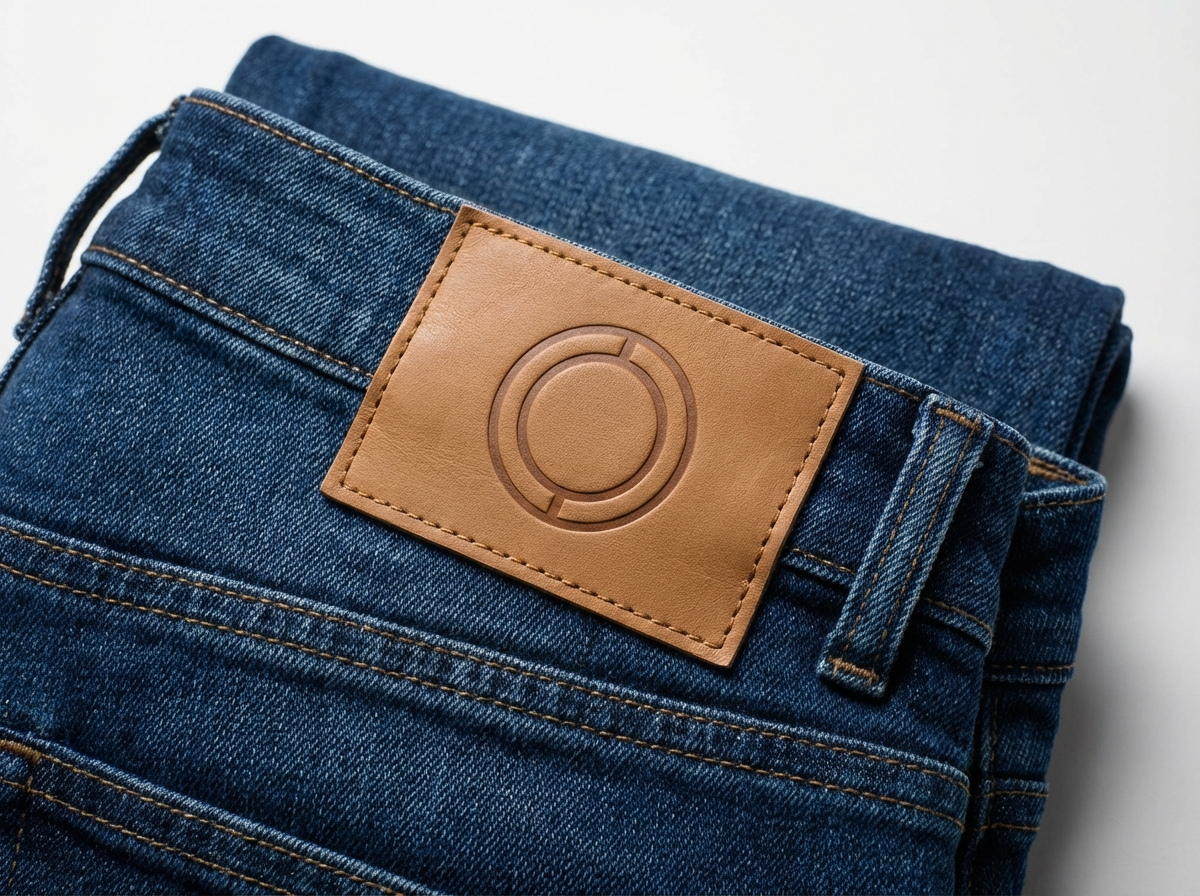
Pick up a pair of premium jeans. Flip them around. That patch on the back waistband? It's probably leather, or at least it looks like it. Leather patches have been a branding staple in fashion for decades, and they've expanded well beyond denim into hats, bags, jackets, and just about anything that benefits from a rugged touch.
But here's where it gets interesting. Not all leather patches are actually leather. The rise of faux leather (also called vegan leather, synthetic leather, or leatherette) has given brands a second option that looks remarkably similar to the real thing but at a different price point and with different characteristics. We produce both types at New York Custom Labels, and the question we get asked more than any other is: which one should I go with?
The honest answer is that it depends on your brand, your product, your budget, and your values. Neither option is universally better. But by the time you finish reading this, you'll know exactly which one is right for your application.
What Real Leather Patches Actually Are
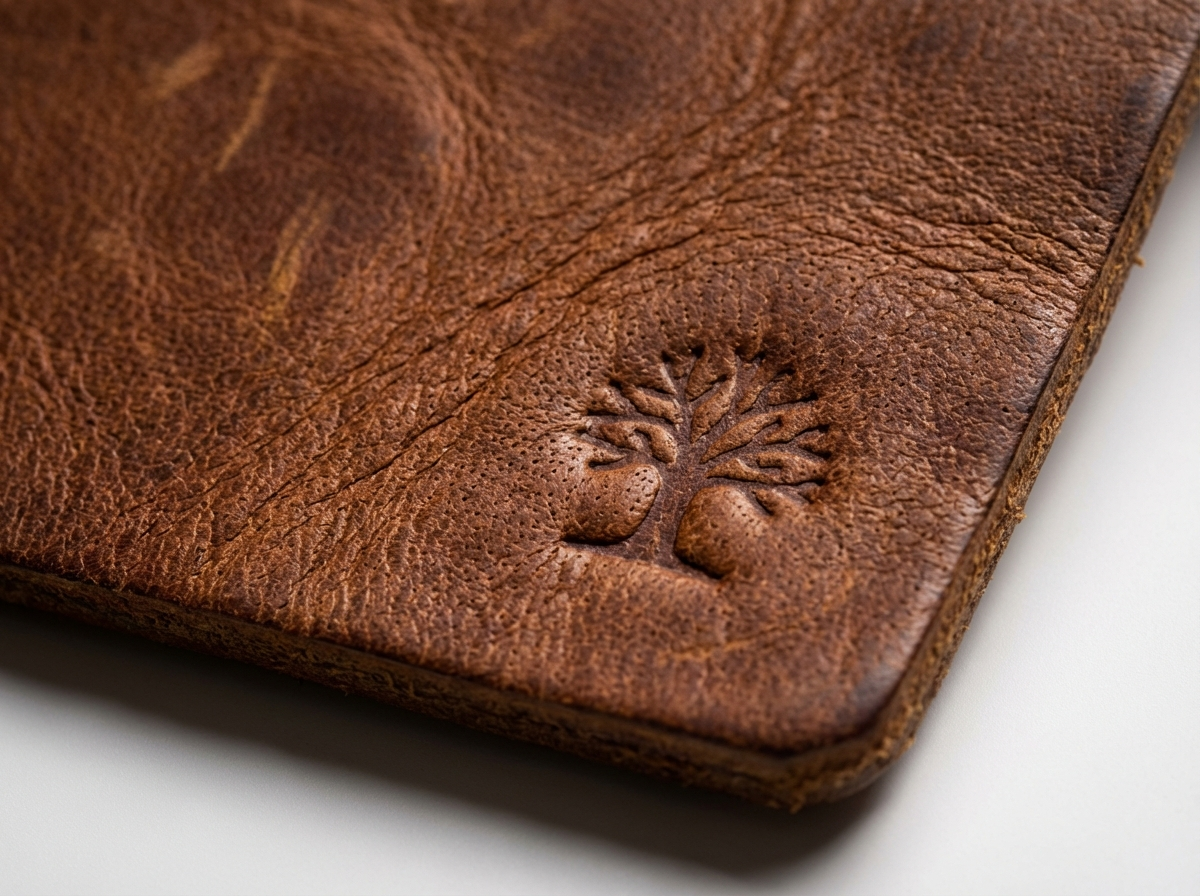
Genuine leather patches are cut from animal hide, typically cowhide, that's been tanned and finished. The material is natural, which means every piece has slightly different grain patterns, texture variations, and color depth. That's part of the appeal. A real leather patch doesn't look manufactured in the way that synthetic materials do. It looks organic because it is.
For custom branding, logos and text are applied to real leather through debossing (pressing the design into the surface), embossing (raising it above the surface), or laser engraving (burning away a thin layer to create a darker shade). Each method creates a different visual effect, and all three hold up well over time.
Real leather also develops a patina with age and use. The color shifts slightly, the surface softens, and it picks up a character that's unique to the individual item. For brands selling premium goods like high-end denim, artisan leather goods, or heritage workwear, this aging process is a feature, not a flaw. It reinforces the message that the product is built to last.
The material is dense, with a distinct weight and hand feel. When a customer picks up a garment with a genuine leather patch, they can feel the difference. That tactile experience registers at a subconscious level as "quality."
What Faux Leather Patches Offer
Faux leather patches are made from synthetic materials like polyurethane (PU) or a PU-coated fabric. Modern faux leather has improved dramatically over the past decade. The best synthetics mimic the look and feel of real leather so convincingly that most consumers can't tell the difference at a glance.
Faux leather offers several distinct advantages. Since faux leather is manufactured, it has better color accuracy across all pieces in the order. For brands that need tight color matching across hundreds or thousands of units, that consistency matters.
The material is also inherently water-resistant in a way that untreated genuine leather isn't. Faux leather patches won't absorb moisture, stain from rain, or develop water spots. For products used outdoors like hats, outerwear, and bags it is a practical benefit.
Then there's the ethical aspect. A growing segment of consumers actively avoid animal products. Vegan leather patches let brands serve that market without compromising on the leather aesthetic. It's particularly relevant for brands in the sustainability space, outdoor recreation, and fashion-forward streetwear where the customer base skews younger and more environmentally conscious.
Faux leather accepts the same branding methods of debossing, embossing, and laser marking as real leather. The laser tends to create a slightly different contrast on synthetic versus genuine, but the effect is clean and professional either way.
Side-by-Side: Where Each Material Wins
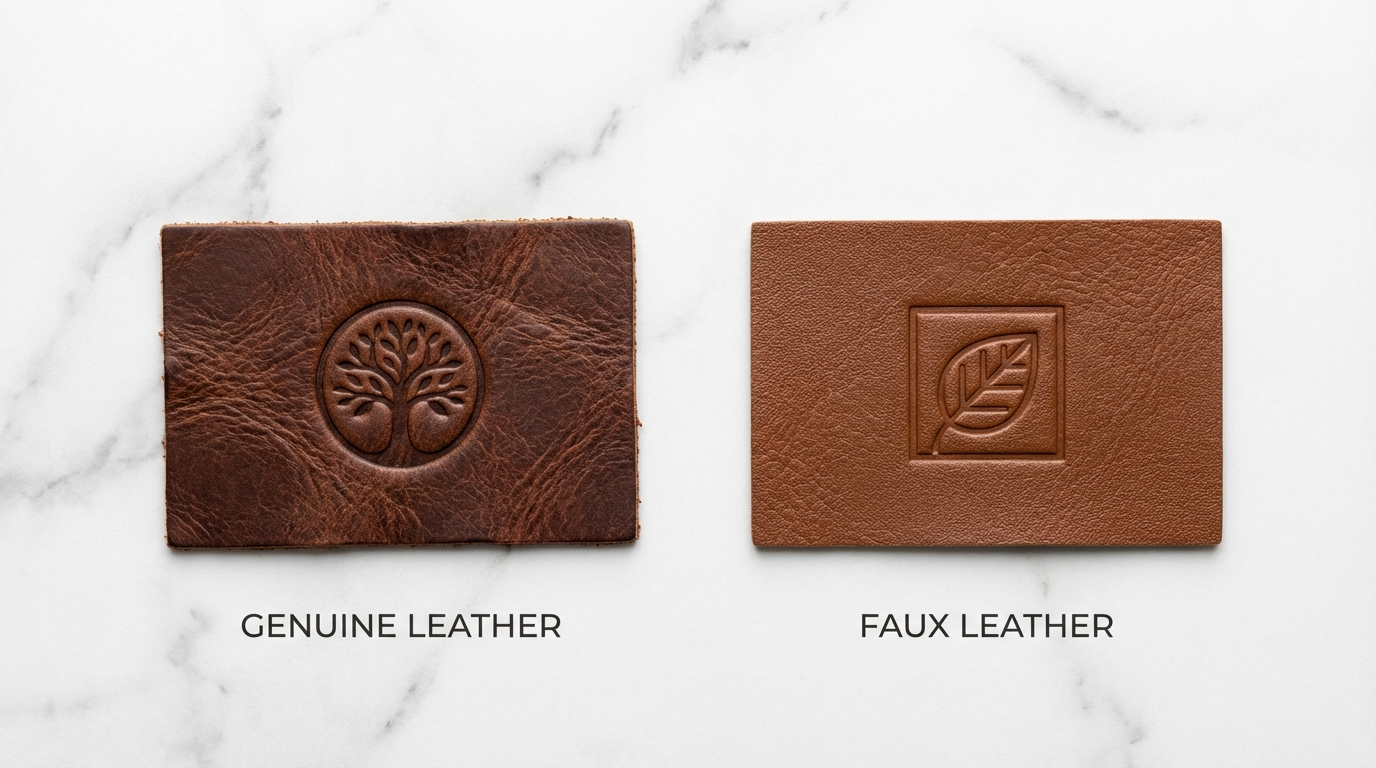
Look and feel. Real leather has a natural warmth and grain that varies piece to piece. Faux leather looks more uniform and consistent. If your brand identity leans heritage, artisan, or premium, real leather reinforces that. If your brand is clean, modern, and consistent, faux leather's uniformity may actually serve you better.
Durability. Both hold up well, but they age differently. Real leather develops character. It softens, darkens slightly, and the debossed or engraved design becomes more pronounced with wear. Faux leather maintains its original appearance longer but can eventually crack or peel under extreme conditions (heavy UV exposure, very high heat). In normal use on garments, both will outlast the product they're attached to.
Cost. Faux leather is less expensive per unit. The raw material costs less, and the manufacturing waste is lower because synthetic sheets are more uniform than natural hides. For large orders of hundreds or thousands of patches, the savings add up. Real leather typically costs 20-40% more depending on the hide quality and finishing.
Minimum orders. At New York Custom Labels, leather patches (both real and faux) start at a 50-piece minimum. That's low enough for small brands to test the waters without a huge commitment.
Environmental impact. This one's more nuanced than it first appears. Real leather is a byproduct of the meat industry — the hides would exist regardless. But tanning processes use chemicals and water. Faux leather avoids animal products but is petroleum-derived and not biodegradable. Neither option is perfectly "green," so the choice often comes down to which environmental trade-off aligns better with your brand's values and messaging.
How to Pick the Right One for Your Brand
After years of helping brands make this decision, we've found that a few questions cut through the noise quickly.
What's the product price point? If you're selling a $200 jacket or $150 pair of jeans, real leather matches the perceived value. If you're selling $30 hats or mid-range bags, faux leather delivers the look without inflating your cost of goods sold beyond what makes sense.
Does your customer care about vegan/cruelty-free? If you're marketing to a sustainability-conscious audience, faux leather isn't just an alternative it is a selling point. Some brands actually call it out on the product listing. "Vegan leather patch" has become a feature, not a compromise.
How many do you need? For small runs (50-200), the per-unit cost difference between real and faux may not significantly impact your bottom line. At higher volumes (500+), the savings from faux leather become more meaningful.
What's the application environment? Products that get wet regularly benefit from faux leather's moisture resistance. Products that live in a closet and get worn in controlled environments can take full advantage of real leather's premium feel.
What story does your brand tell? This is the question that matters most. A heritage workwear brand building on tradition and craftsmanship? Real leather is on-brand. A modern DTC streetwear label pushing innovation and sustainability? Faux leather fits the narrative.
Design Considerations for Both Materials
Regardless of which material you choose, a few design principles apply to all custom leather patches.
Simplify your artwork. Both real and faux leather patches work best with clean, bold designs. Fine text under about 1mm doesn't always produce clearly. If your full logo is too detailed, use a simplified icon or wordmark version. The best leather patch designs have strong visual contrast and clear shapes that read well at small sizes.
Consider the color. Natural leather comes in a range of browns, tans, and blacks. You can dye it, but the options are more limited than synthetic. Faux leather can be produced in virtually any color, including bright and unique shades. Most brands stick with classic leather tones for either material because it reads as "leather" to the consumer regardless of the actual material.
Size and shape matter. Standard rectangular patches (roughly 2x3 inches or 2.5x4 inches) and circle patches are the most common and most cost-effective. Custom die-cut shapes like shields, or your logo's silhouette are possible but add to the overall cost. For a first order, start with a standard shape. You can always upgrade to custom shapes on reorders once you've validated the design.
Attachment method. Most leather patches are sewn on, either at the garment factory or after production. Some brands use a fold-over design where the patch wraps around the waistband or strap and is stitched through both layers, creating that classic jeans-patch look. Heat-seal backing is available for faux leather but not recommended for genuine leather, as the heat can damage or discolor the material.
What We See Brands Getting Wrong
The most common mistake is overthinking it. We've had customers agonize over the real-vs-faux decision for weeks, then order both samples and realize either one would work perfectly. If you're genuinely torn, order a small batch of each and put them side by side on your product. The right choice usually becomes obvious in context.
The second mistake is designing the patch in isolation. A gorgeous, detailed leather patch can look busy and cluttered on a minimalist garment. A too-simple patch can look cheap on a complex, detailed product. Design the patch for the product, not the other way around.
Getting Your Leather Patches Made
Whether you go with real leather or faux, the ordering process at New York Custom Labels is the same. Send us your artwork (vector files preferred), tell us the material preference, quantity, and size, and we'll send back a free quote with a digital mockup. Our minimum is 50 pieces for both real and faux leather patches, and production runs about 2-3 weeks from art approval.
We've been making custom labels and patches since 2008, and leather patches are one of our specialties. If you're still not sure which material is right for your brand, reach out. We're happy to talk it through and send you samples of both so you can make the call with the actual product in your hands.
The information below is required for social login
Sign In
Create New Account