


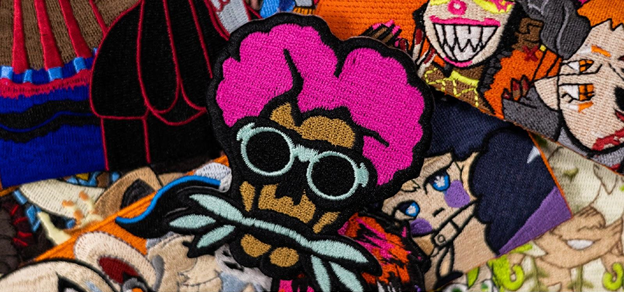
We work with brands, designers, schools, sports teams, small businesses, and individuals who want high quality custom patches that look professional and last. One of the most common questions we hear from customers is simple: when it comes to iron on patches for clothes vs. sew on patches, which is better?
The answer depends on your goals, your garment, and how you plan to use the patch. Both options offer unique advantages. As a company that manufactures custom patches with both iron on and sew on backings, we want to help you make the best decision for your specific needs.
Iron On Patch Basics
Iron on patches for clothes feature a heat activated adhesive backing. When heat and pressure are applied with a household iron or heat press, the adhesive melts and bonds to the fabric. Once cooled, the patch adheres securely to the garment.
Iron on patches are extremely popular because they are convenient and easy to apply. You do not need sewing skills, special equipment, or professional alteration services. Most customers can apply their patch in just a few minutes at home.
We manufacture iron on patches for clothes for fashion brands, event merchandise, promotional apparel, school uniforms, scout groups, and more. They are especially popular for quick customization projects and retail ready apparel.
Sewn On Patches
Sew on patches are exactly what they sound like. Instead of heat activated adhesive, these patches are stitched directly onto the garment using a needle and thread or sewing machine.
Sew on patches do not rely on glue. The stitching secures the patch permanently to the fabric. Because of this, they are often considered the most durable option for heavy use garments.
Many workwear companies, motorcycle clubs, military units, and organizations that require long term durability prefer sew on patches. They are built to withstand frequent washing and demanding conditions.
Ease of Application: Convenience vs. Commitment
One of the biggest differences between iron on patches and sew on patches is how they are applied.
Iron On Patches
Iron on patches for clothes are designed for simplicity. You place the patch where you want it, apply heat with firm pressure, and allow it to cool. That is it. There is no threading a needle and no precise stitching required.
For brands launching apparel lines, iron on patches can reduce labor costs if you are applying them in house. For customers purchasing patches individually, it eliminates the need to visit a tailor.
Sew On Patches
Sew on patches require stitching. That can be done by hand or with a sewing machine. While this method is highly secure, it takes more time and skill. For bulk production, professional stitching may add additional cost.
If you do not have sewing experience, applying sew on patches can feel intimidating. However, once stitched, the patch is extremely secure.
If convenience and speed are your top priorities, iron on patches typically have the advantage.
Durability and Longevity
Durability is one of the most important considerations when choosing between iron on patches for clothes and sew on patches.
Iron On Patches
Modern adhesive technology has improved significantly. When properly applied to the right fabric, iron on patches can hold up very well through regular washing and wear.
However, they do rely on adhesive. Over time, repeated high heat drying or heavy industrial washing can weaken the bond. For everyday fashion garments like jackets, hoodies, denim, and backpacks, iron on patches perform very well.
Sew On Patches
Sew on patches are mechanically attached with thread. That stitching creates a very strong bond that is not dependent on heat or adhesive. For work uniforms, tactical gear, and garments exposed to extreme conditions, sew on patches are typically more durable long term.
If maximum longevity under heavy use is your primary goal, sew on patches may be the better option.
Fabric Compatibility
Not all fabrics respond to heat in the same way. This is another important factor.
Iron On Patches
Iron on patches for clothes work best on sturdy, heat resistant fabrics such as cotton, denim, canvas, and polyester blends. These materials can handle the temperature required to activate the adhesive.
Delicate fabrics like silk, nylon, or certain performance materials may not tolerate high heat. In those cases, iron on patches may not bond properly or could damage the fabric.
Sew On Patches
Sew on patches are more versatile in terms of fabric compatibility. Because they do not rely on heat, they can be attached to delicate materials or garments that cannot withstand ironing.
If you are working with specialty fabrics or technical performance wear, sew on patches may offer more flexibility.
Appearance and Finish
From a design standpoint, both iron on patches and sew on patches can look identical from the front. The difference lies in how they are secured.
Iron On Patches
When applied correctly, iron on patches lay flat and clean. They create a smooth finish without visible stitching around the edges unless you choose to stitch them for added reinforcement.
Some customers prefer the clean look of iron application for fashion apparel.
Sew On Patches
Sew on patches often feature a visible stitch line around the border. For many brands and organizations, this visible stitching adds a traditional, authentic look. It can enhance the rugged aesthetic of workwear or heritage apparel.
From a visual standpoint, neither is inherently better. It depends on the style you want to achieve.
Why Work with New York Custom Labels?
When you partner with New York Custom Labels, you are not just ordering patches. You are working with a team that understands construction, backing options, fabric compatibility, and branding.
We produce high quality embroidered, woven, and specialty custom patches with both iron on and sew on backings. Our team will help you determine which option aligns with your needs, whether you are launching a fashion line, outfitting a team, or creating promotional merchandise.
Iron on patches for clothes and sew on patches both have strong advantages. The key is choosing the option that fits your project rather than assuming one is always superior.
If you are ready to create custom patches that reflect your brand and hold up over time, our team is here to help you design the perfect solution.
The information below is required for social login
Sign In
Create New Account